The Bolo Tie: How It Became Arizona’s Official Neckwear

It shows up at weddings, courtrooms, rodeos, and roadside diners. Some people wear it every day. Others only break it out when they want to look like they belong.
The bolo tie is one of the most recognizable pieces of Western style. In Arizona, it is more than that. It is official.
Here is how it got there.
What Is a Bolo Tie?
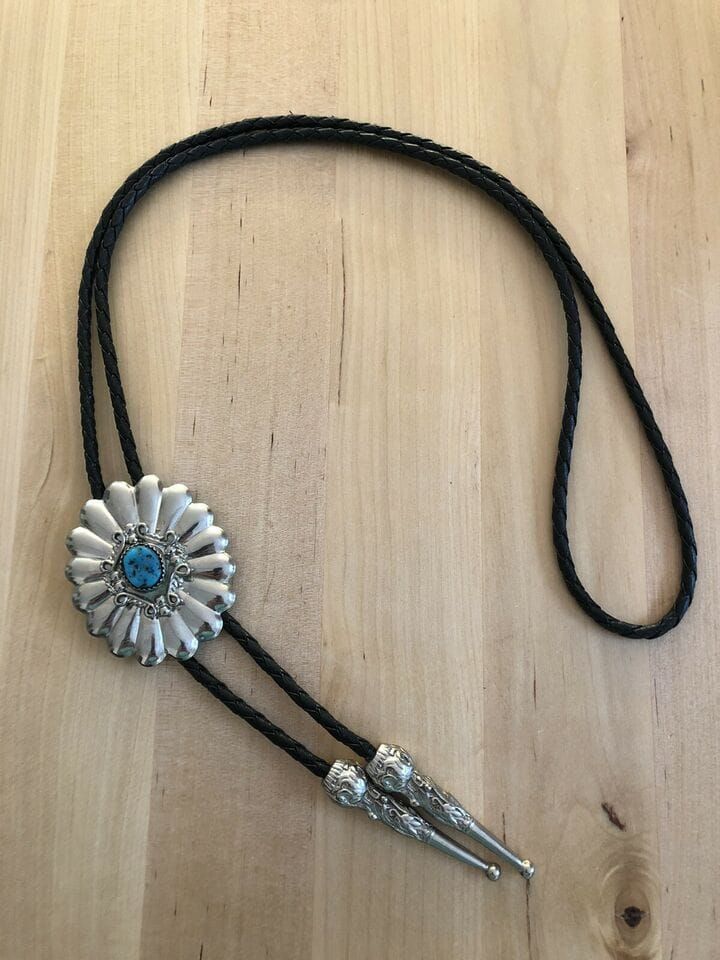
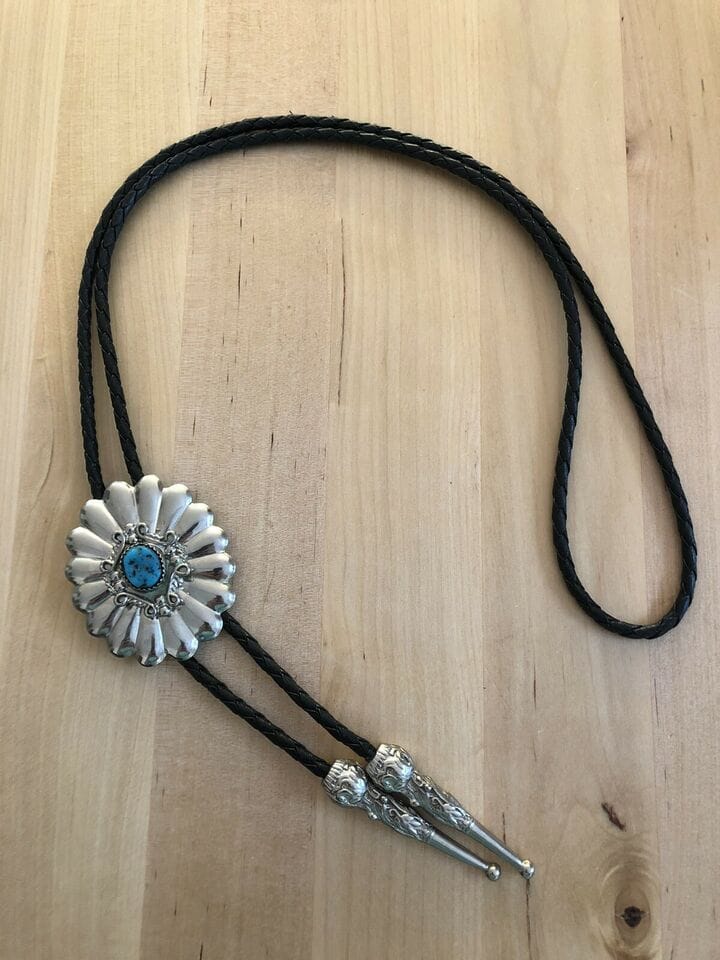
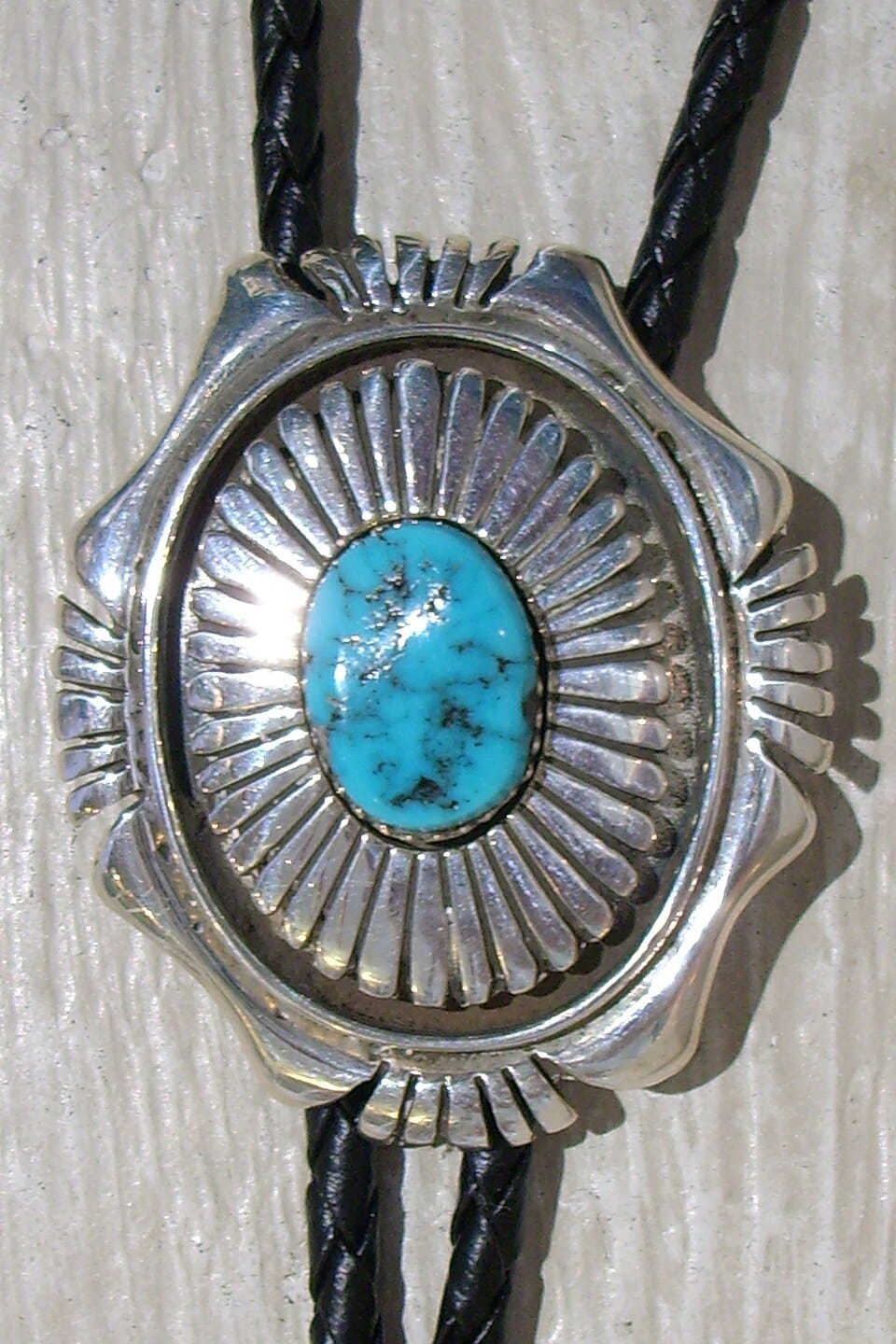
A bolo tie is simple in design. A cord, usually leather, fastened with a decorative clasp that slides up to the neck. The ends are finished with metal tips called aiguillettes.
That clasp is where the personality lives. Turquoise, silverwork, engraved scenes, even custom pieces. No two are exactly the same.
It functions like a tie, but it does not follow the same rules. That is part of the appeal.
Where It Started
The origins of the bolo tie are tied to the American Southwest, particularly Arizona and New Mexico.
In the early 20th century, ranchers and cowboys needed something practical. A standard necktie did not make sense on horseback or in the heat. A cord tie stayed in place, was easy to adjust, and did not get in the way.
There are a few competing origin stories, but one of the most cited names is Victor Cedarstaff. In the late 1940s, Cedarstaff is said to have created an early version of the bolo using a hatband-style cord and a clasp, then began producing and selling them out of Wickenburg.
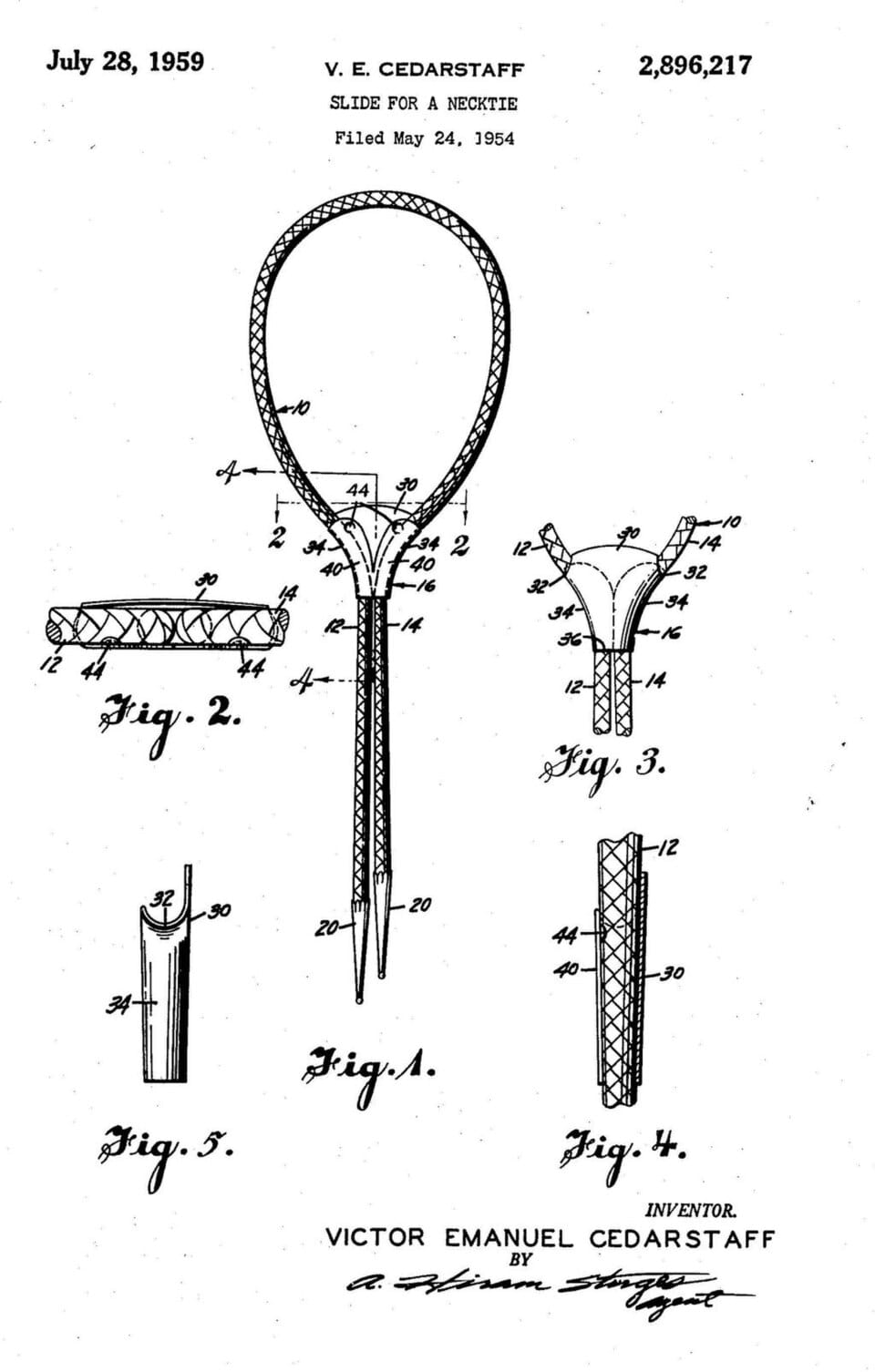
Whether he was the first or just the first to commercialize it, the timing lines up. Post-war Arizona was growing, and Western identity was becoming something people wanted to wear, not just live.
From Ranch Wear to Western Symbol
By the 1950s and 60s, the bolo tie had moved beyond ranch work.
It became part of the broader Western aesthetic, alongside boots, denim, and silver belt buckles. Tourists bought them. Locals customized them. Silversmiths across the Southwest turned them into small pieces of wearable art.
Turquoise, in particular, became a defining element, tying the bolo to the region’s Indigenous artistry and materials.
At the same time, the bolo started showing up in more formal settings. It was not just practical anymore. It was a statement.
Making It Official
In 1971, Arizona made it official.
The bolo tie was designated as the state’s official neckwear, a move that reflected both its cultural roots and its everyday use across the region.
The push came from local advocates who saw the bolo as something distinctly Southwestern. Not imported, not adapted, but created out of the environment and lifestyle of the state.
Arizona was not alone for long. New Mexico followed, along with a few other Western states. However, Arizona was first to formalize it.
Why It Stuck
Plenty of regional trends come and go. The bolo tie stayed.
Part of that is practicality. It works in the heat. It is adjustable. It does not feel out of place in a state where formality is often optional.
More than that, it fits Arizona’s identity. Independent, a little unconventional, and tied closely to the land.
You can wear one with a suit or with a denim shirt. Either way, it still reads the same.
Where You See It Today
Walk through Tucson during a local event, or spend time in Scottsdale galleries, and you will see bolo ties. Some are simple. Some are high-end pieces made by skilled silversmiths. Some are passed down. Others are picked up on a road trip.
They are still being made, still being worn, and still tied to the same idea they started with.
More Than a Tie
The bolo tie did not become Arizona’s official neckwear by accident.
It solved a practical problem, evolved into a cultural symbol, and stuck because it still makes sense here.
In a state full of wide open space and strong identity, it fits.
Subscribe to Roam Arizona
Sign up to get new Arizona stories, hidden gems, and updates delivered to your inbox.
You’re officially on the trail.
Peek at your inbox (or the spam gulch) for your first map.