Javelina Encounters: Guide for Living (and Hiking) with Arizona's Desert Herds

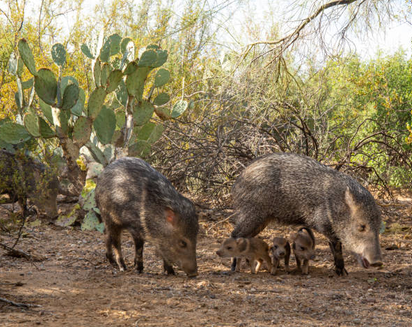
If you spend enough time in Arizona, chances are you'll eventually cross paths with a javelina. You might spot one wandering through your neighborhood at dawn, hear a herd rustling through the brush while hiking, or catch a glimpse of several trotting across a desert wash. While many people call them "desert pigs," javelinas are not pigs at all. They are fascinating native animals that have called the Southwest home for thousands of years.
Knowing how to react during an encounter can help keep both you and the animals safe. Fortunately, javelinas are usually more interested in finding food than confronting people.
What Is a Javelina?
The collared peccary, commonly known as a javelina, belongs to a completely different family than domestic pigs or wild hogs. Their closest relatives are found in Central and South America, and they have evolved to thrive in the deserts of Arizona.
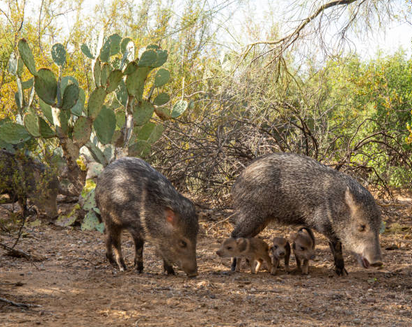
Adult javelinas typically weigh between 35 and 60 pounds and stand about two feet tall at the shoulder. They have coarse, grayish black hair with a lighter colored collar around their neck, which gives them their official name.
Although their eyesight is poor, they have an excellent sense of smell and hearing. Much of their daily life revolves around following scents to locate food and stay connected with the rest of their herd.
Why Javelinas Come Into Neighborhoods
Many people are surprised the first time they see a herd walking down a street. In reality, neighborhoods often provide everything a javelina is looking for.
Bird seed scattered beneath feeders, pet food left outdoors, fallen fruit, overflowing garbage cans, compost piles, and landscaping all attract hungry javelinas. During dry periods, they are also drawn to easy sources of water, including fountains, swimming pools, and dripping irrigation systems.
What Do Javelinas Eat?
Despite their intimidating appearance, javelinas are primarily plant eaters.
Their favorite foods include prickly pear cactus pads and fruit, mesquite beans, agave, roots, tubers, seeds, and various desert plants. They occasionally eat insects, bird eggs, small animals, and carrion, but vegetation makes up the vast majority of their diet.
Their tough mouths allow them to eat cactus pads covered in spines, making them well adapted to life in the Sonoran Desert.
Are Javelinas Dangerous?
Javelinas are generally shy animals that prefer to avoid people. Most encounters end with the animals walking away once they realize a person is nearby.
Problems usually occur when javelinas become accustomed to being fed, are surprised at close range, or feel trapped. Mothers with young offspring can also become defensive if they believe their babies are threatened.
Although attacks are uncommon, a frightened javelina has sharp canine teeth capable of causing serious injuries. Dogs are involved in many aggressive encounters because barking or chasing can cause the animals to defend themselves.
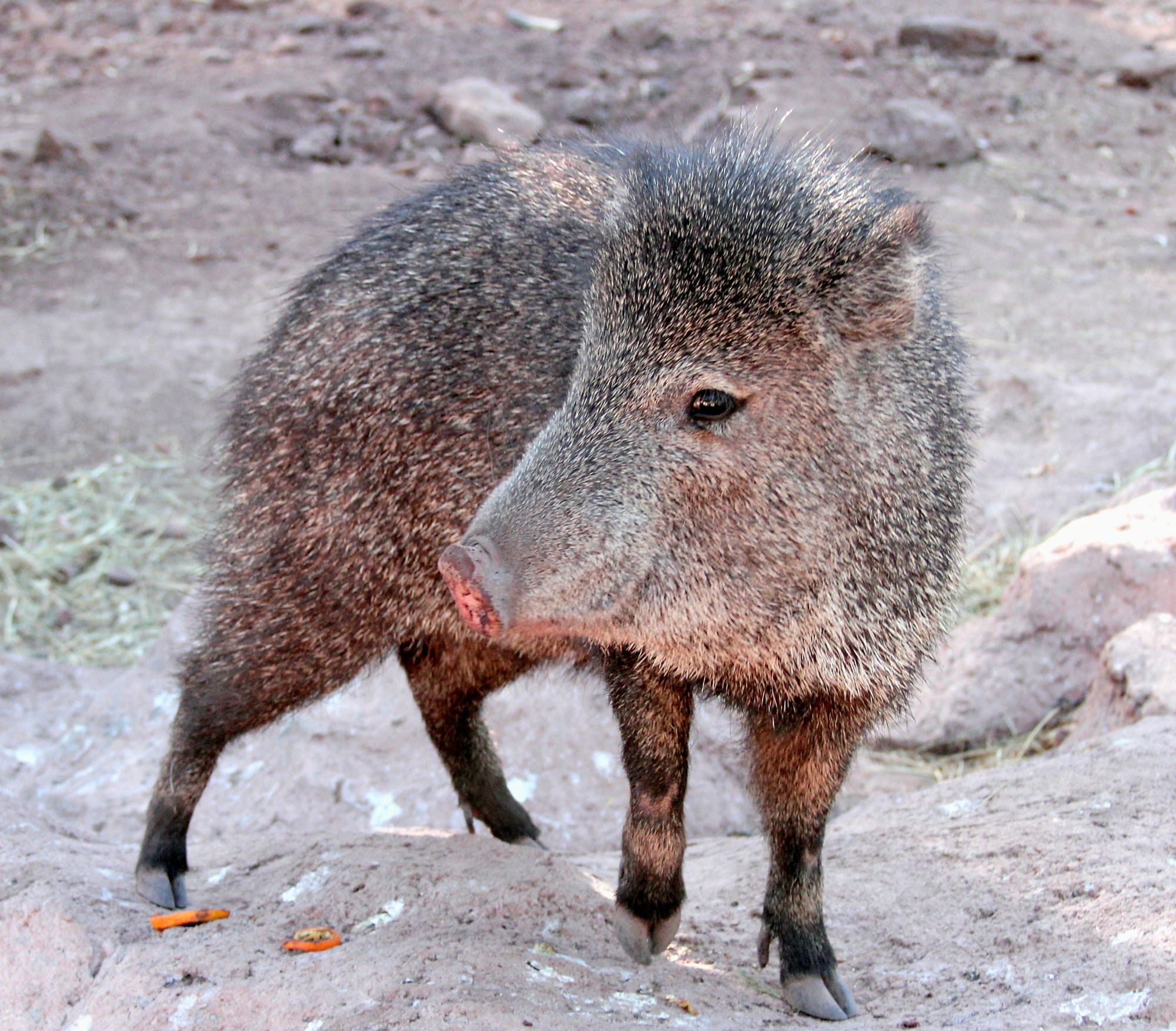
The safest approach is to give every javelina plenty of space and never attempt to feed or approach one.
Living Alongside Javelinas
Arizona's growing cities continue to expand into traditional wildlife habitat. As a result, encounters with javelinas have become increasingly common.
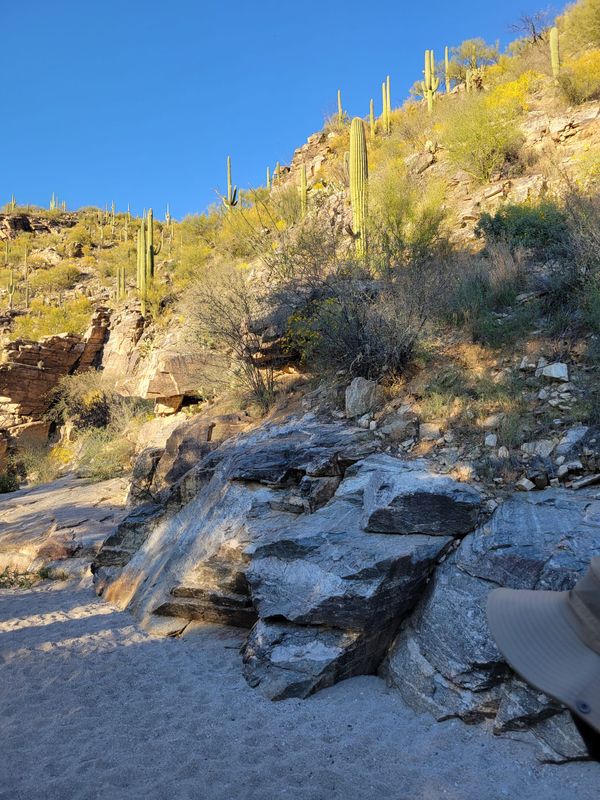
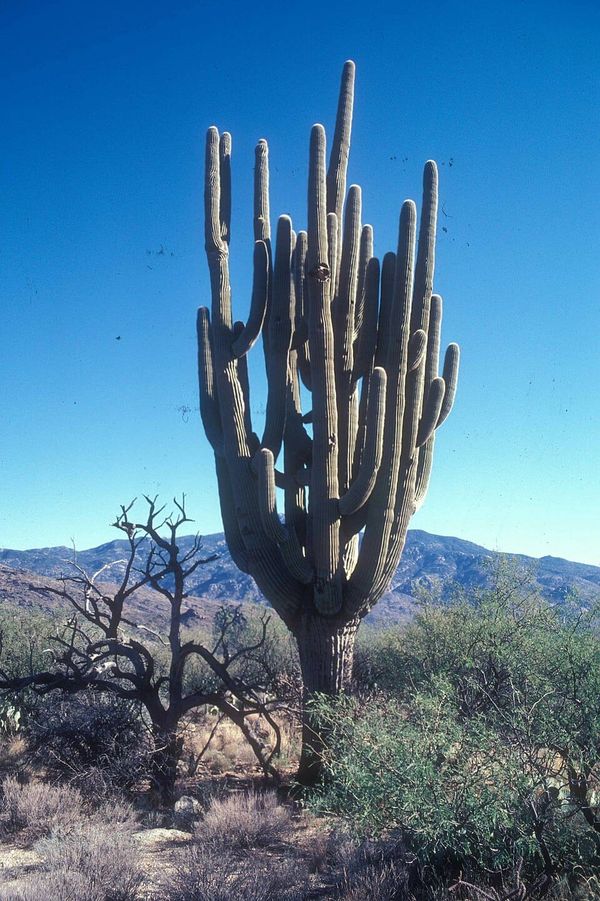
Rather than viewing them as pests, many residents have learned to appreciate them as part of everyday desert life. Watching a herd quietly forage through a natural wash or disappear into the saguaros is a reminder that Arizona's wildlife still thrives alongside its communities.
Simple precautions such as securing trash, removing outdoor food sources, protecting gardens with fencing, and respecting their space allow people and javelinas to coexist safely.
What to Do During a Hike
Seeing a javelina on a trail can be exciting. In most cases, the encounter is over within moments.
Stay calm and avoid running. Give the herd plenty of room. If possible, step off the trail or slowly back away to increase the distance between you and the animals.
Speak in a calm but firm voice so the javelinas recognize that you are human. Since they rely heavily on sound and smell, they often leave once they know someone is nearby.
Keep dogs leashed and under control. If a dog begins barking or lunging, calmly move away from the herd as quickly as it is safe to do so.
If a javelina appears aggressive or approaches too closely, make yourself appear larger, wave your arms, clap your hands, and speak loudly while continuing to back away. Most javelinas will retreat once they recognize you as a potential threat.
A Unique Part of Arizona's Wild Side
Javelinas may never win any beauty contests, and their musky odor is certainly memorable, but they are one of the Sonoran Desert's most recognizable animals. Their social behavior, adaptability, and important role in the desert ecosystem make them far more interesting than their nickname of "desert pig" suggests.
The next time you encounter a herd on a hiking trail or wandering through your neighborhood, give them the space they deserve and enjoy the opportunity to observe one of Arizona's most iconic native species.
Javelina Safety Checklist
- Never feed javelinas.
- Keep at least 30 feet of distance whenever possible.
- Keep dogs leashed and under control.
- Do not corner or approach a herd.
- Watch for babies, especially in spring.
- Remove pet food, bird seed, and fallen fruit from your yard.
- Secure trash cans and compost bins.
- If a javelina approaches, speak loudly, wave your arms, and slowly back away.
- Enjoy them from a safe distance and let them continue on their way.
Subscribe to Roam Arizona
Sign up to get new Arizona stories, hidden gems, and updates delivered to your inbox.
You’re officially on the trail.
Peek at your inbox (or the spam gulch) for your first map.