Five Remarkable Historic Sacred Places Across Arizona

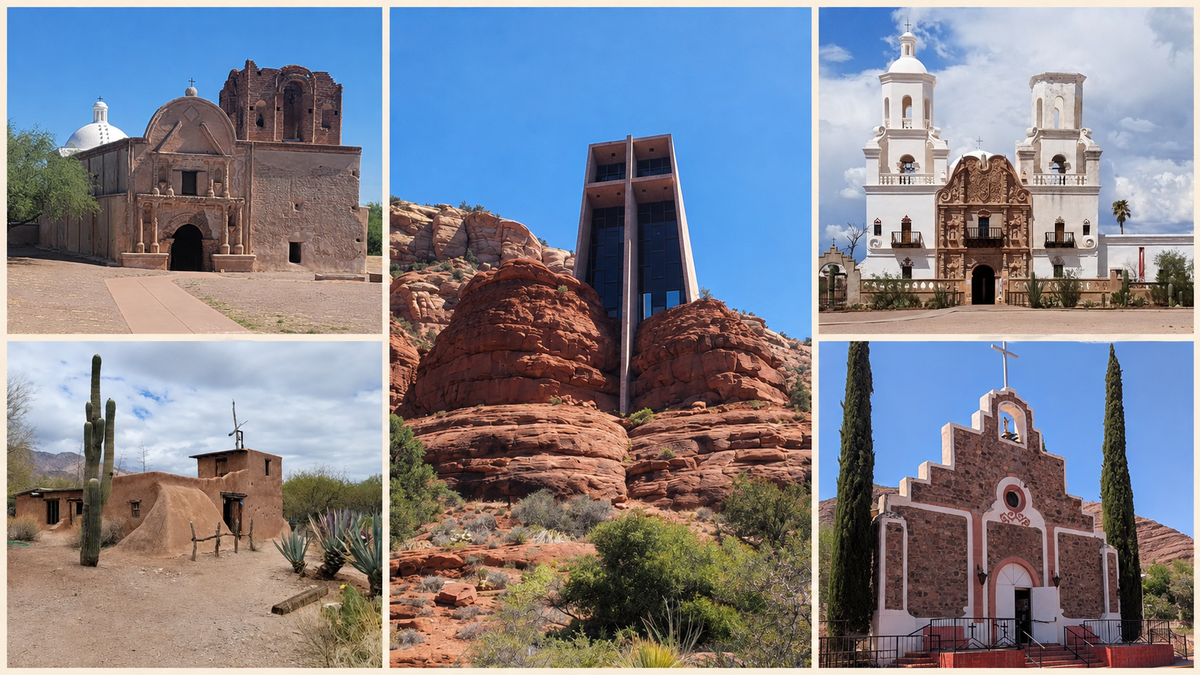
Arizona’s most memorable sacred spaces do not follow a single architectural script. One rises from Sedona’s red rock like a piece of midcentury sculpture. Another is tucked against the canyon wall of an old copper town, its 1905 wooden core protected by a later shell of cement and rock. Farther south, handmade adobe walls blur the line between chapel, artwork, and desert architecture, while centuries-old missions preserve stories of O’odham continuity, Spanish colonization, and generations of restoration work.
These five places are not presented as a ranking. They form a deliberately varied route through northern, eastern, and southern Arizona, selected for the strength of their stories, the character of their architecture, and the experience of standing inside, or at Tumacácori, inside the remains of a place built for reflection.
Several are active houses of worship rather than attractions. Visit quietly, avoid services unless you are attending them, ask before making interior photographs, and remember that San Xavier stands within the living community of Wa:k on the Tohono O’odham Nation. Historic does not mean frozen in the past.
Chapel of the Holy Cross
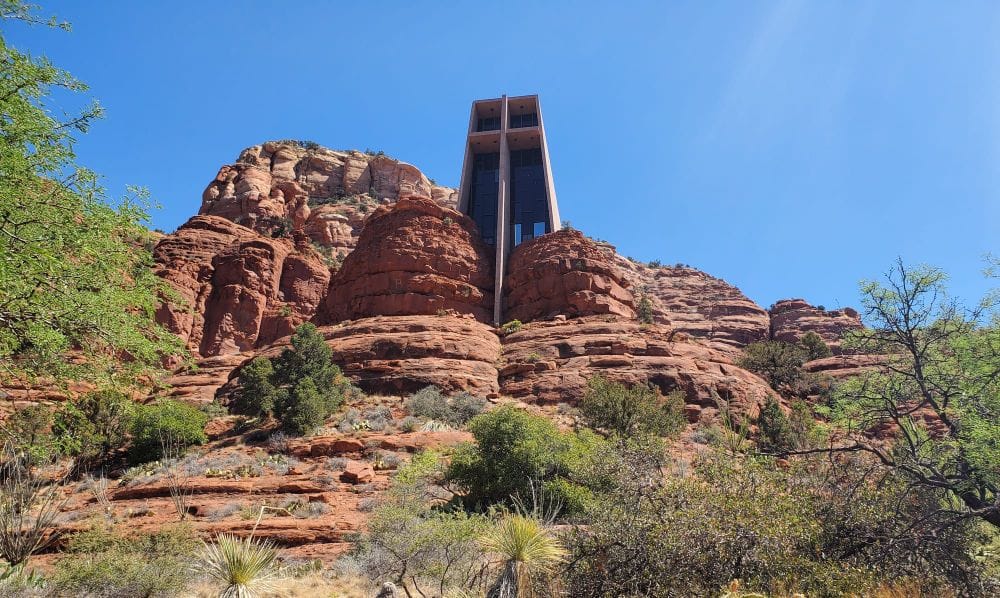
Sedona is full of dramatic views, but few buildings meet the landscape as confidently as the Chapel of the Holy Cross. Its tall cross and angular concrete walls occupy a cleft in the red rock, creating a composition that feels both grounded and improbably airborne.
Inside, the cross organizes the room while windows return the eye to Sedona’s buttes. The site is deservedly popular, so arrive near opening on a weekday if you want a quieter visit. Give yourself time on the terrace, where the view explains why architecture and landscape are inseparable here.
The chapel currently lists daily public hours of 9 a.m. to 5 p.m., with last entry at 4:45 p.m. Parking can fill quickly; check the chapel’s site for current access and shuttle information before driving up Chapel Road.
Sacred Heart Catholic Church
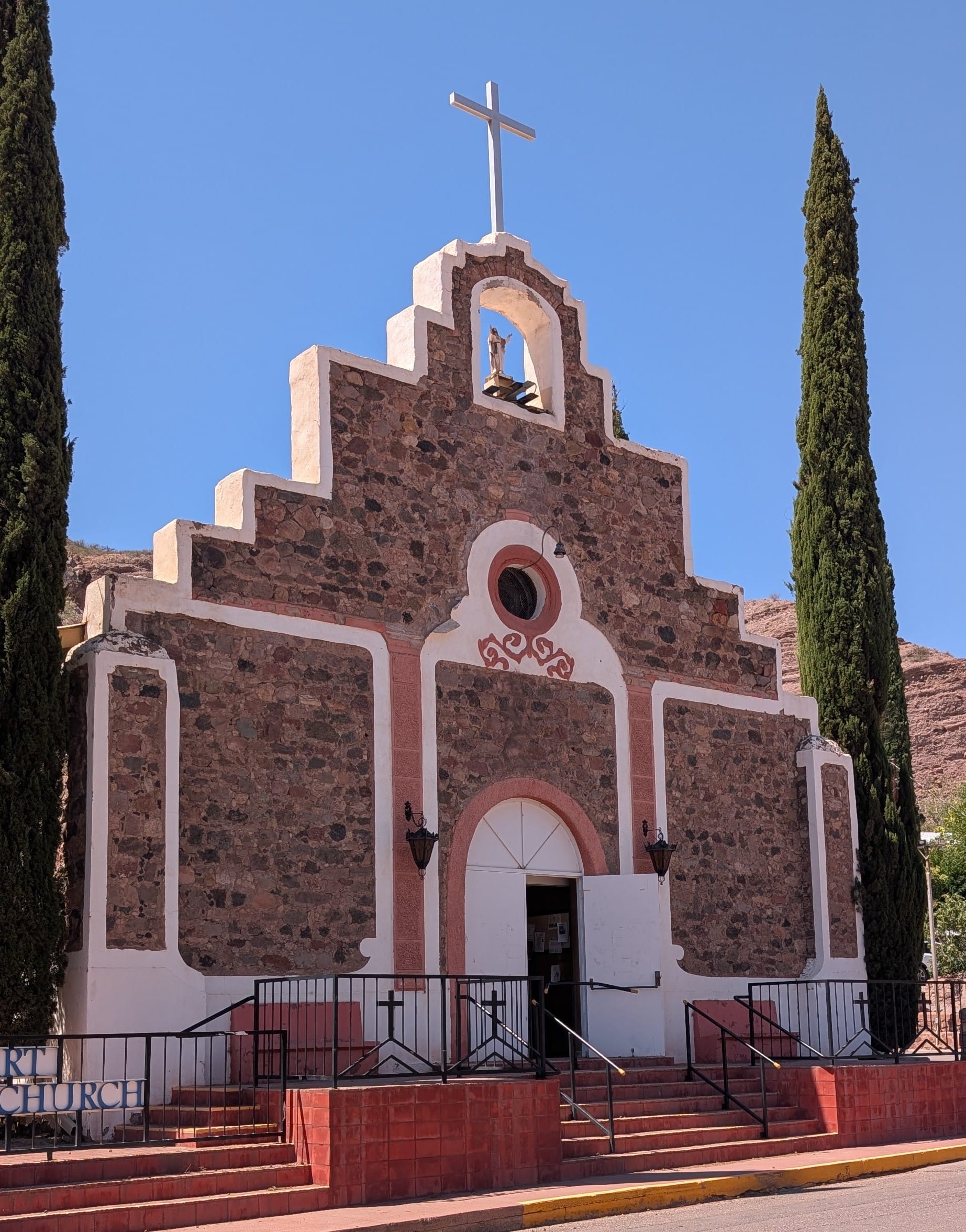
Sacred Heart sits near the western end of Chase Creek, where Clifton’s commercial buildings were squeezed between a narrow road, the creek channel, and steep canyon walls. Its setting alone makes it unlike anything else on this route. The church belongs to the same mining-town landscape shaped by copper, floods, fires, and generations of immigrant labor.
Catholic worship in Clifton predates the present building. The first church in North Clifton, built in 1889, was lost to a flood. Its replacement burned, and a later adobe church in the Chase Creek business district disappeared in the flood of 1905. That same year, Monsignor Peter Timmermans completed a wooden church on the present site, furnishing it with leaded stained-glass windows, a marble altar, and porcelain figures imported from Italy.
In 1917, the wooden structure was enclosed in a massive shell of cement and rock. Sacred Heart is more than an old church. It is a record of how Clifton repeatedly rebuilt in a landscape where water, fire, and industry dictated the shape of the town.
Sacred Heart is an active parish, not a regularly staffed museum. Mass is currently offered Saturday evening and Sunday morning, with noon weekday Masses on Wednesday and Friday. Call the parish office at 928-865-2285 before visiting for an interior tour or editorial photography.
DeGrazia’s Mission in the Sun
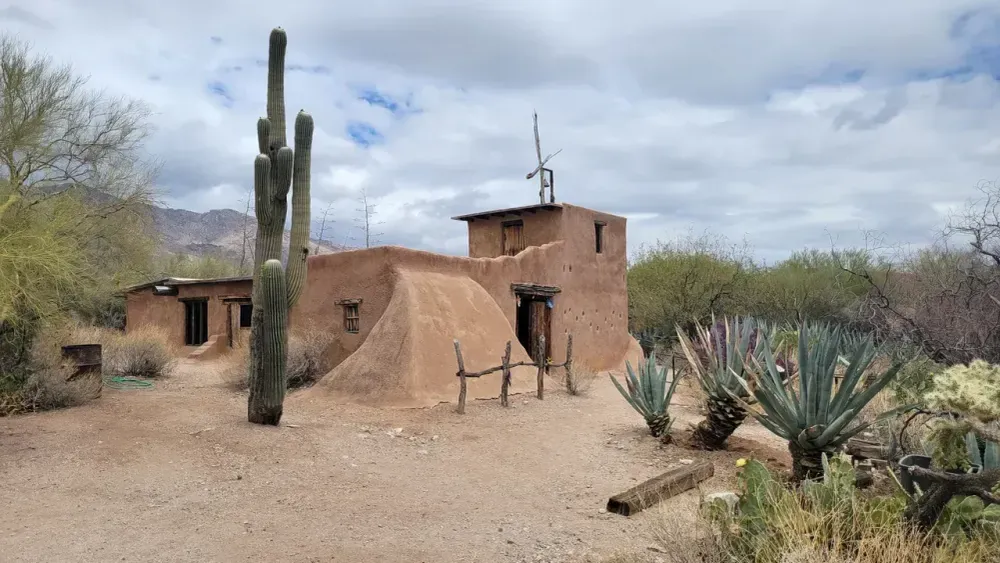
Most historic chapels are remembered for a congregation or religious order. Mission in the Sun is inseparable from a single Arizona artist. Ettore “Ted” DeGrazia completed it in 1952 as the first building on what became the Gallery in the Sun campus.
Following his own plans, DeGrazia and friends handcrafted the chapel from adobe. Its thick walls, buttressed forms, rock floor, wooden roof supports, and ceiling open to the sky make it feel like a work of art visitors can enter. DeGrazia painted frescoes across the interior and created an image of Our Lady of Guadalupe for the altar.
Photos, candles, and mementos left near the altar also show that the mission is more than an architectural curiosity. It continues to function as a personal place of reflection for visitors of many backgrounds.
The mission and other outdoor exhibits may be visited without paying gallery admission. The gallery currently operates from 10 a.m. to 4 p.m. daily, except New Year’s Day, Easter, Thanksgiving, and Christmas. The mission page describes the chapel as open 365 days a year, so confirm current gate access and photography arrangements before a dedicated shoot.
Mission San Xavier del Bac
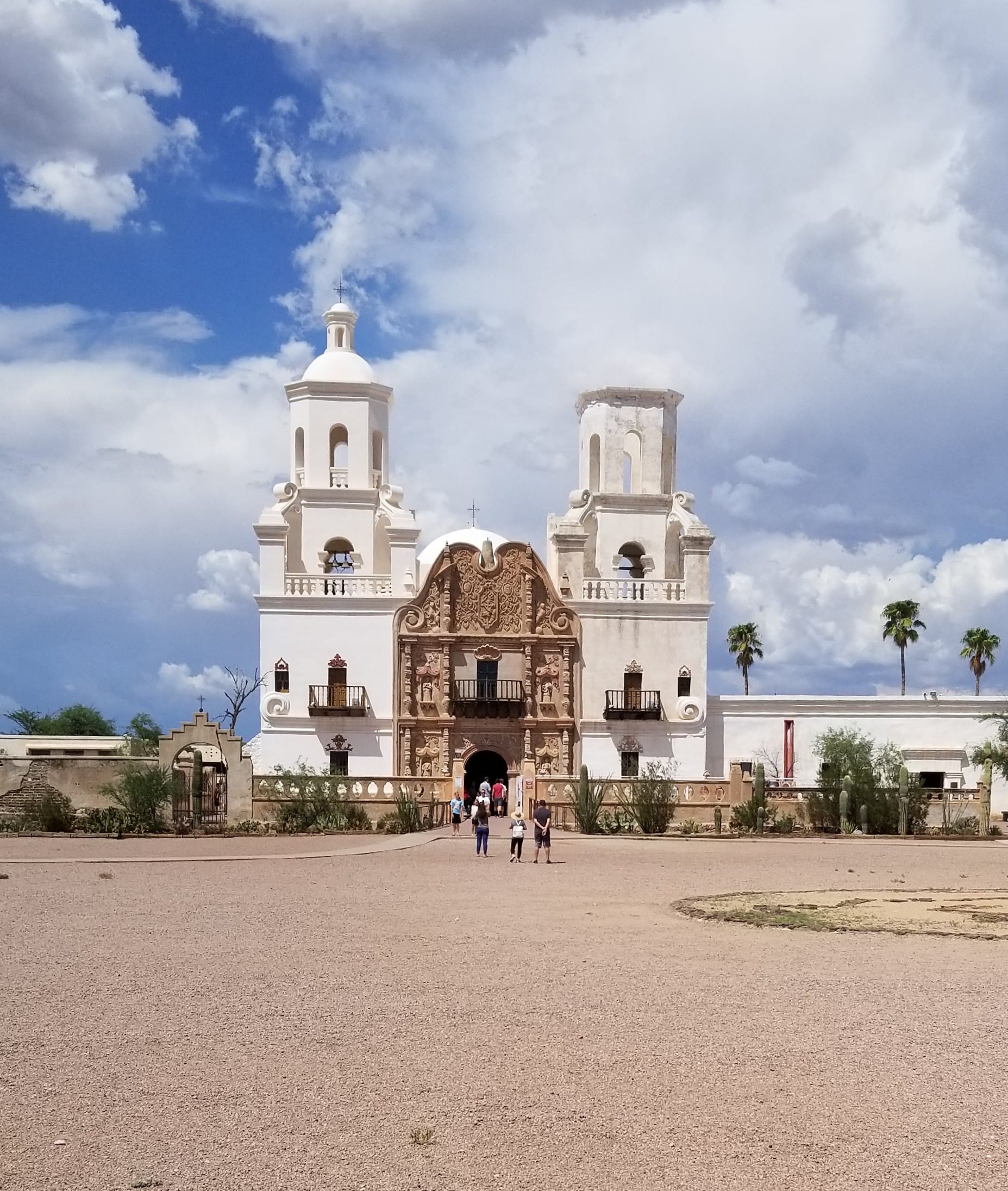
San Xavier del Bac is the most historically significant stop on this route, but it should not be approached as a museum piece. The mission remains an active parish serving the village of Wa:k in the San Xavier District of the Tohono O’odham Nation.
The current church was begun under Franciscan leadership in 1783 and completed in 1797. It is widely recognized as Arizona’s oldest intact European structure and one of the country’s outstanding examples of Spanish Colonial Baroque architecture, with masonry vaults, sculpted saints, painted surfaces, and theatrical decorative details.
Pause first in the plaza to take in the asymmetrical bell towers, then step inside slowly. Generations of parishioners and conservators have kept the building alive through earthquakes, lightning, water damage, and repeated restoration campaigns.
The church currently lists daily visitor hours of 9 a.m. to 4 p.m. Admission is free, and free docent tours are generally offered every day except Sunday. There is no air conditioning or heating, so dress for the season and for a place of worship.
Mission San José de Tumacácori
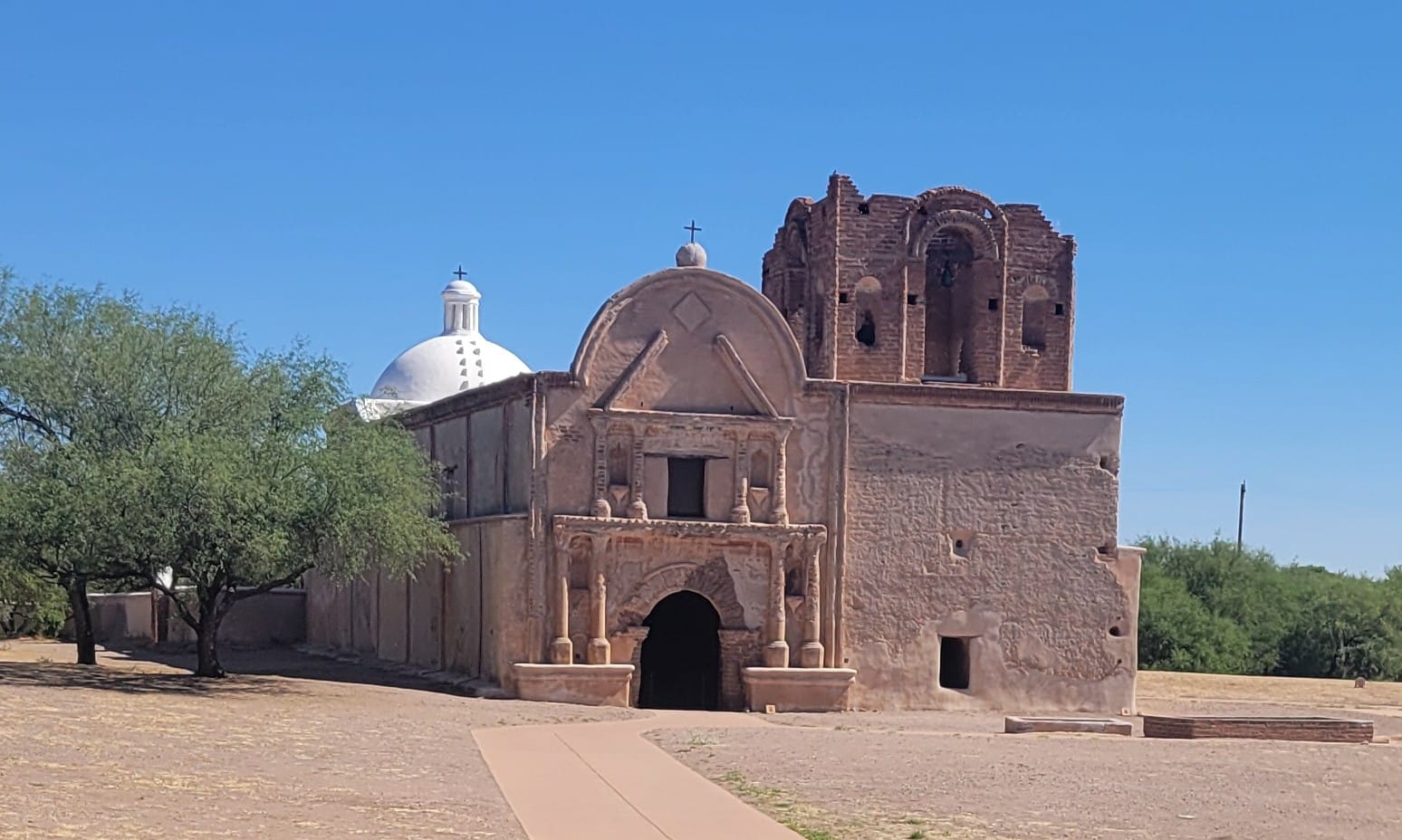
Tumacácori offers a different kind of encounter: not a polished sanctuary, but an unfinished and weathered church whose walls make the passage of time visible. The mission sits in the Santa Cruz River valley, a place where O’odham, Yaqui, Apache, Spanish, Mexican, and American histories intersect, sometimes through exchange and cooperation, and often through conflict and unequal power.
Kino established Tumacácori as a mission site in January 1691, making it the oldest such site in present-day Arizona. After the 1751 Pima Revolt, the mission moved to the west side of the river and became San José de Tumacácori. Franciscans began the church visitors see today in 1800.
The National Park Service visitor center adds essential context, helping the architecture read as part of a larger cultural landscape rather than as an isolated ruin.
The park is generally open daily from 9 a.m. to 5 p.m., except Thanksgiving and Christmas. As of August 2026, admission is $10 per adult age 16 and older and the park is cashless. Check current conditions, fees, and tour schedules before leaving Tucson or Tubac.
Places That Still Speak
Taken together, these five places reveal how Arizona history accumulates rather than disappears. A modern chapel anchored in red rock, a church repeatedly rebuilt in a flood-prone mining town, an artist’s fire-scarred adobe sanctuary, a living parish on the Tohono O’odham Nation, and an unfinished mission ruin all carry the marks of the people and forces that shaped them. None has survived as a pristine relic. They have been repaired, altered, worshipped in, abandoned, damaged, and reclaimed. That is what makes them worth the drive. They do more than preserve old architecture. They show how faith, art, colonization, community, landscape, and memory have collided across Arizona, leaving behind places that still ask visitors to slow down and consider whose stories their walls are holding.
Subscribe to Roam Arizona
Sign up to get new Arizona stories, hidden gems, and updates delivered to your inbox.
You’re officially on the trail.
Peek at your inbox (or the spam gulch) for your first map.