Navajo Code Talkers: The Secret Weapon of the Pacific

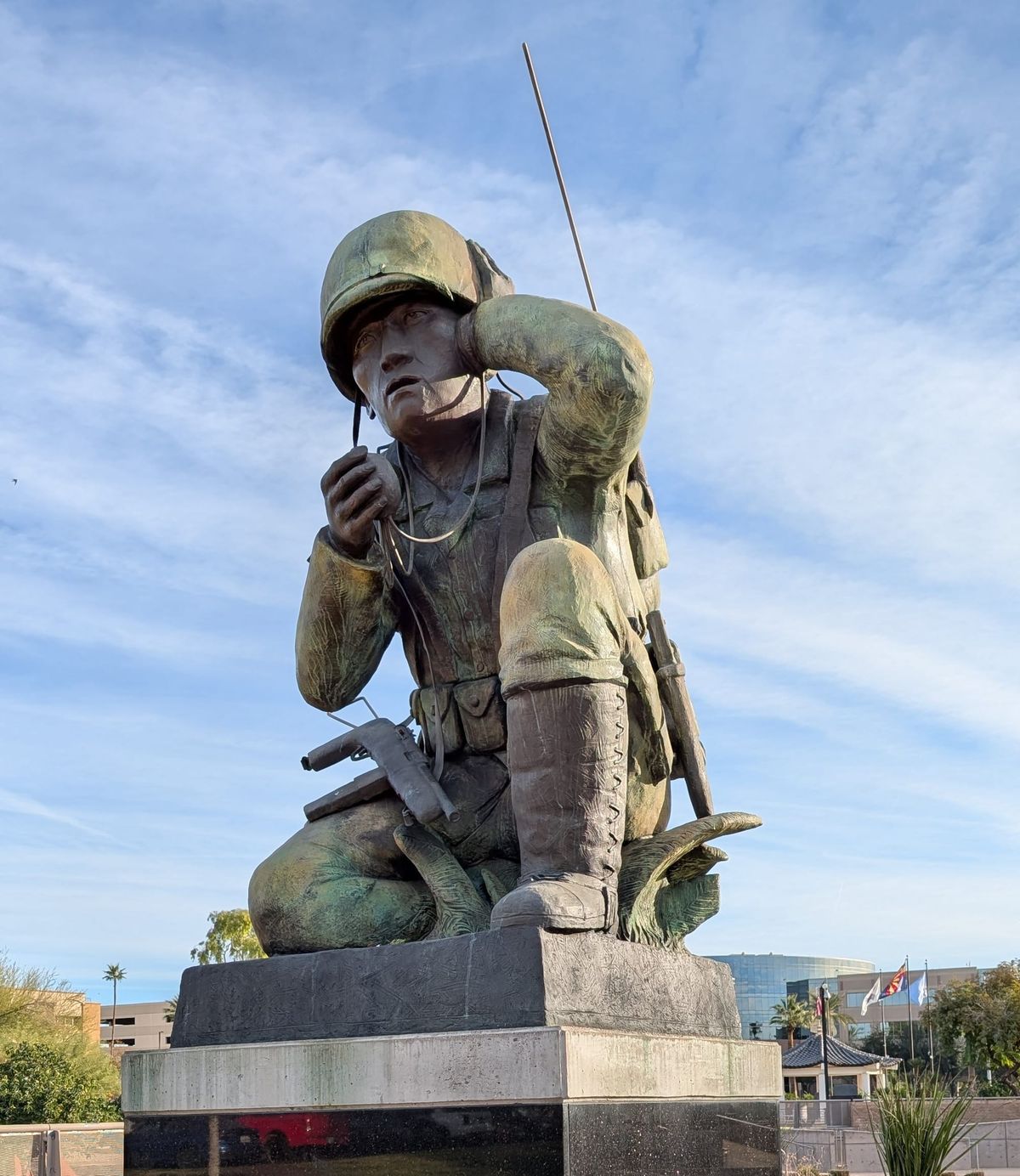
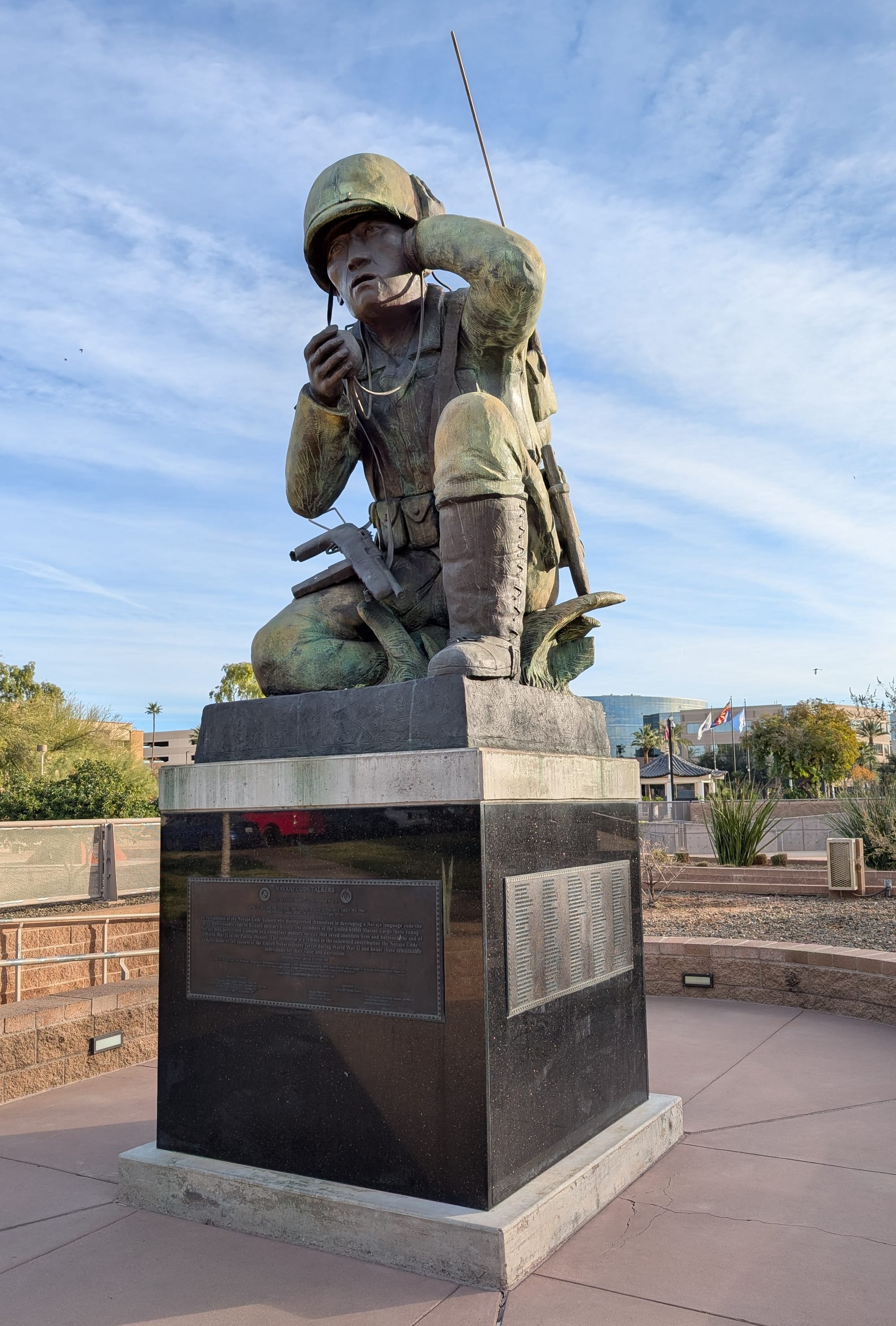
The Navajo Code Talkers were one of the most vital assets to the United States military during World War II, creating a code that was never broken by the enemy. The idea originated with Philip Johnston, a World War I veteran who had grown up on the Navajo Nation as the son of a missionary. He realized the complexity of the Diné language. It features a syntax and tonal qualities entirely foreign to non-speakers and made an ideal basis for military encryption. In 1942, the first 29 recruits, known as the "Original 29," arrived at Camp Pendleton to develop the system.
The Genesis of the Code
The program was the brainchild of Philip Johnston, a veteran who grew up on the Navajo Reservation. He understood that Navajo is an unwritten, tonal language with no shared roots with any European or Asian tongues. To a non-speaker, a single word can have multiple meanings depending on the inflection, and the syntax is incredibly dense. In 1942, the Marine Corps recruited the "Original 29" Navajo men to develop a formal code at Camp Pendleton.
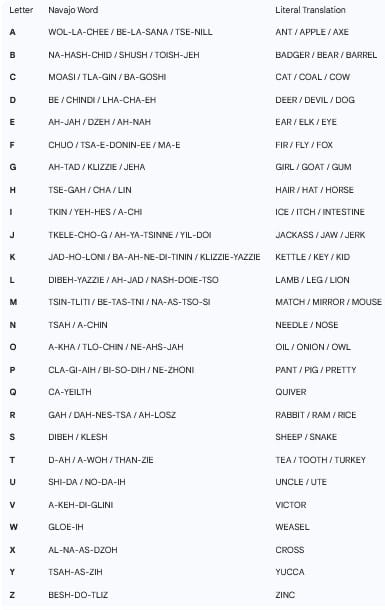
They didn’t just speak Navajo over the radio; they built a code within a code. They developed a dictionary of over 400 terms where Navajo words represented military hardware and maneuvers. A tank became a "tortoise" (chay-da-gahi), a dive-bomber was a "chicken hawk" (gini), and a battleship was a "whale" (lo-tso). For words that weren't in the dictionary, they used a phonetic alphabet where Navajo words for animals or objects represented English letters. This meant that even a native Navajo speaker who wasn't trained in the code would only hear a confusing string of nature-related terms rather than a military directive.
This dual-layer approach meant that even a fluent Navajo speaker who had not been trained in the code would hear a string of unrelated words about nature and technology, rather than a coherent military command. This was proven when a Navajo soldier who was not a code talker was captured and tortured by Japanese forces; despite being fluent in the language, he could not decipher the specific military cipher.
Accuracy Under Fire
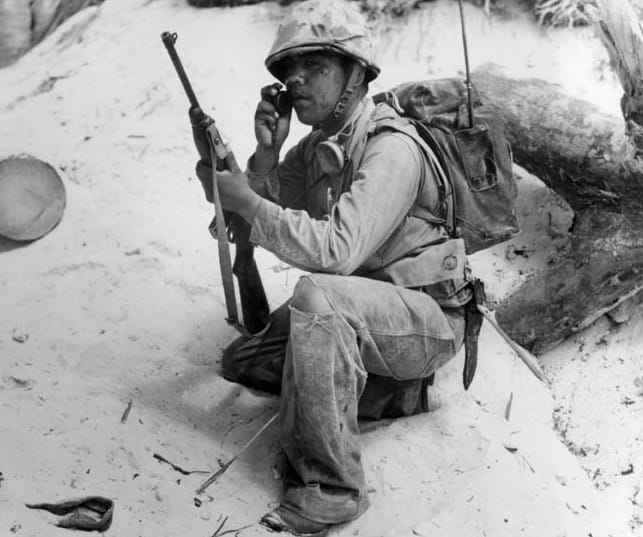
The true test of the Code Talkers came during the island-hopping campaigns, most notably at Iwo Jima. In the first 48 hours of the invasion, six Code Talkers worked around the clock, sending and receiving more than 800 messages. Every single one was transmitted and transcribed with 100% accuracy. Major Howard Connor, the 5th Marine Division's signal officer, famously noted that the Marines would never have taken the island without them.
The speed of the code was also a tactical advantage. While mechanical encryption devices of the era took 30 minutes to encode and decode a three-line message, a Navajo Code Talker could translate and transmit the same information in less than 20 seconds. This real-time communication was the difference between life and death during the chaos of amphibious assaults.
The Decades of Silence
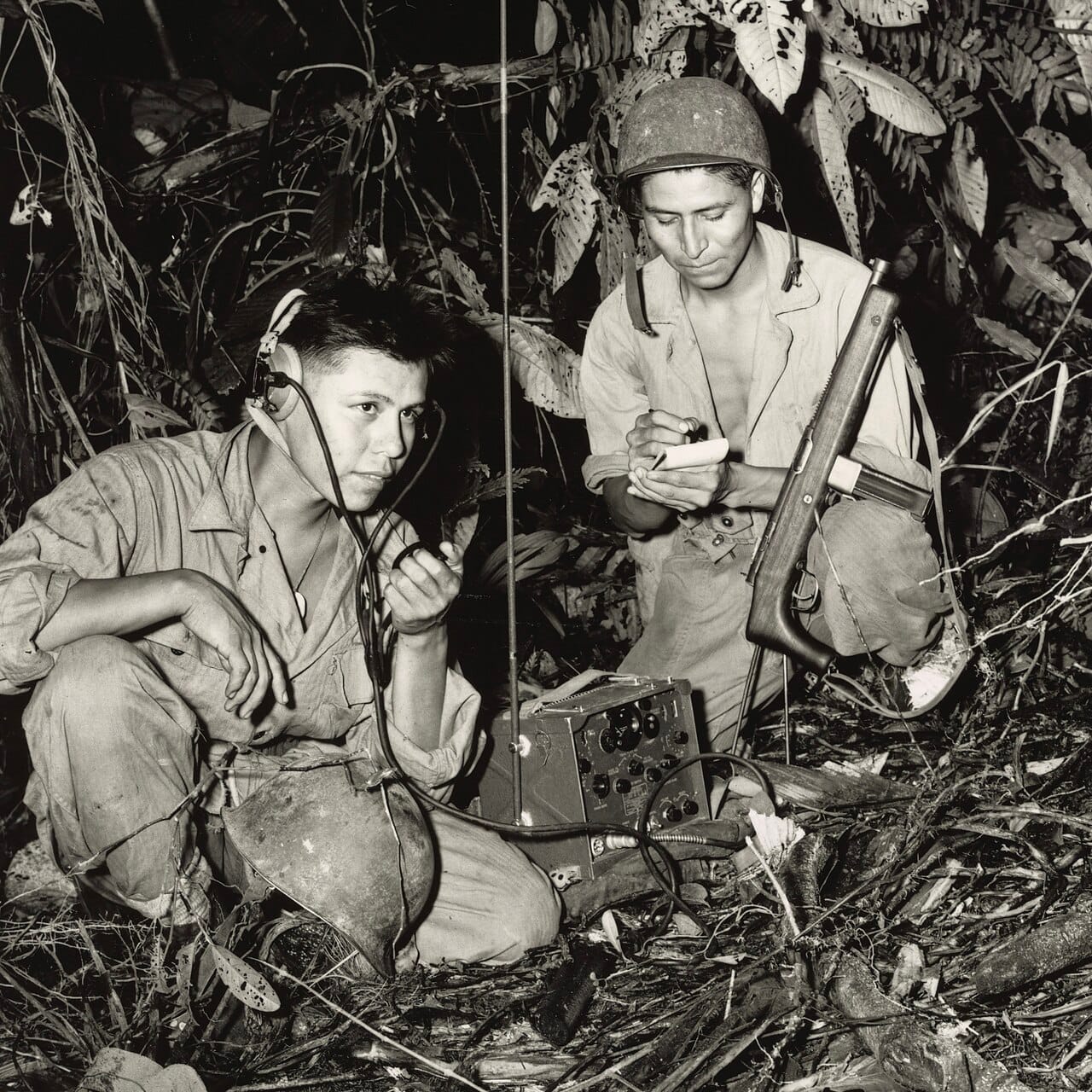
Perhaps the most remarkable part of their story is what happened after the war. Since the code was so effective, the military kept the program classified, hoping to use it in future conflicts. The Code Talkers returned to the Southwest and were ordered never to discuss their roles. They lived for 23 years with their contributions hidden from the public.
It wasn't until the program was declassified in 1968 that the world began to learn the scale of their impact. Today, the Code Talkers are recognized as some of the most elite intelligence specialists in history, having used their native tongue to protect the country.
The Unbreakable Code
This table represents the official Navajo Code Talkers' Dictionary, specifically the phonetic alphabet used to spell out proper names or words without a designated military term. The source is the Naval History and Heritage Command, which maintains the declassified 1945 records of the "Type One" code developed by the U.S. Marine Corps. By assigning multiple Navajo words to common English letters, the Code Talkers ensured that Japanese cryptographers could not use frequency analysis to break the encryption.
To learn more about the specific dates and milestones of Arizona's military contributions, you can explore the list at On This Day in Arizona.
Subscribe to Roam Arizona
Sign up to get new Arizona stories, hidden gems, and updates delivered to your inbox.
You’re officially on the trail.
Peek at your inbox (or the spam gulch) for your first map.