Loudest Desert Animals of Arizona

There's a persistent idea that the desert is a quiet place, all sand and silence and heat shimmer. Anyone who has actually spent time in the Sonoran Desert knows that's not even close to true.
During the day, you get a steady layer of insects, birds, and the occasional mammal going about their business. At night, the entire soundscape changes into something else. Some of the loudest sounds out here come from animals you'd never expect, especially once you consider their size.
A tiny insect can produce a noise that carries across an entire neighborhood. A bird can sound like it's screaming from the top of a saguaro. A frog, of all things, can turn a bone-dry desert wash into a full-blown chorus overnight. These are some of the loudest animals you're likely to hear in Arizona, and what those strange noises actually are.
1. The Cicada
If there's a heavyweight champion of Arizona's desert noise, it's the cicada, and it earns the opening spot because there's no more unmistakable sound of an Arizona summer.
Male cicadas produce their calls using specialized structures called tymbals, ribbed membranes near the base of the abdomen that buckle and snap back as muscles contract and relax. It's less like rubbing two things together and more like repeatedly pressing and releasing the lid of a tin can, just happening dozens of times per second. When dozens or hundreds of cicadas call at once, the combined effect can become almost overwhelming, a wall of sound that seems to come from everywhere and nowhere.
The strangest part is how disproportionate the sound is to the source. It's coming from an insect small enough to hold in your hand. You'll hear them in summer, especially during the hottest part of the day. Arizona's summer soundtrack isn't just air conditioners humming in the background. It's thousands of tiny insects yelling at each other.
2. The Common Raven
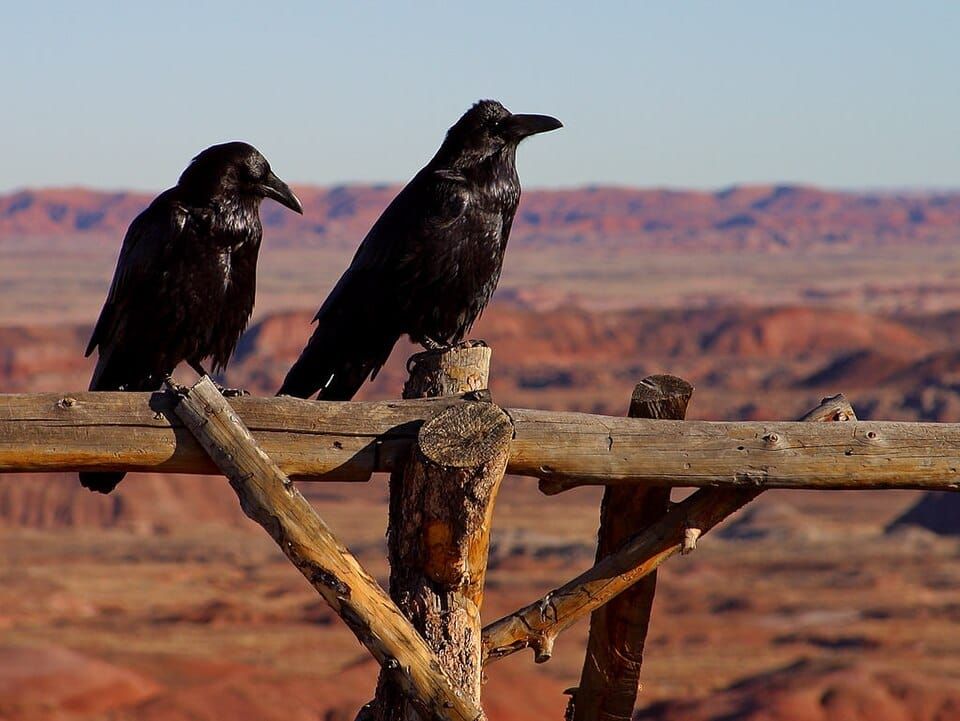
Ravens aren't necessarily the loudest animals on this list in raw volume, but they earn their spot for how far their calls travel through open desert.
Their vocalizations run deep and harsh, ranging from croaks to a surprising variety of other sounds, since ravens are intelligent enough that they aren't limited to one simple call. They're especially noticeable around desert cliffs, canyons, open country, roadside areas, and the edges of urban development. Their dark silhouette and unmistakable voice make them one of the most recognizable birds in the state.
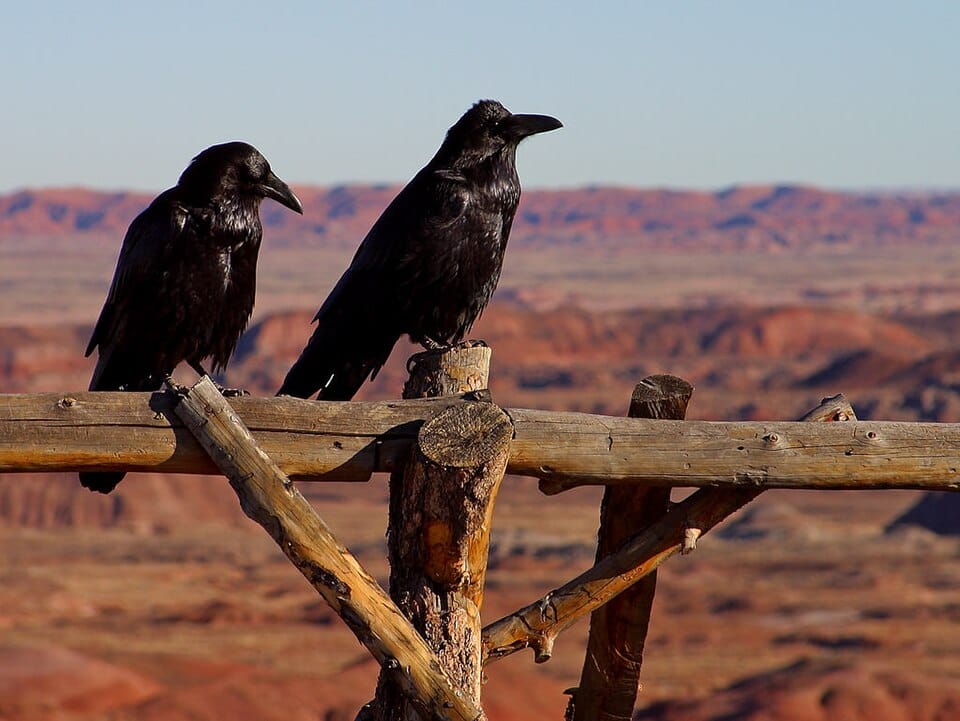
Ravens are also remarkably adaptable, which is part of why they've become such familiar sights across so much of Arizona. Wherever there's open sky and something to perch on, there's a decent chance a raven is nearby, making sure everyone knows it.
3. The Great Horned Owl
If the cicada is the desert's obnoxious daytime buzz, the great horned owl is its nighttime bass section.
Instead of a grating midday drone, you get a deep, resonant hoo-hoo after dark. A call that can carry surprisingly far across the quiet desert, particularly around washes, riparian areas, and open country. One of the stranger effects of an owl's call is how close it can sound even when it is much farther away. It makes nighttime desert walks feel a little more charged than they otherwise would.
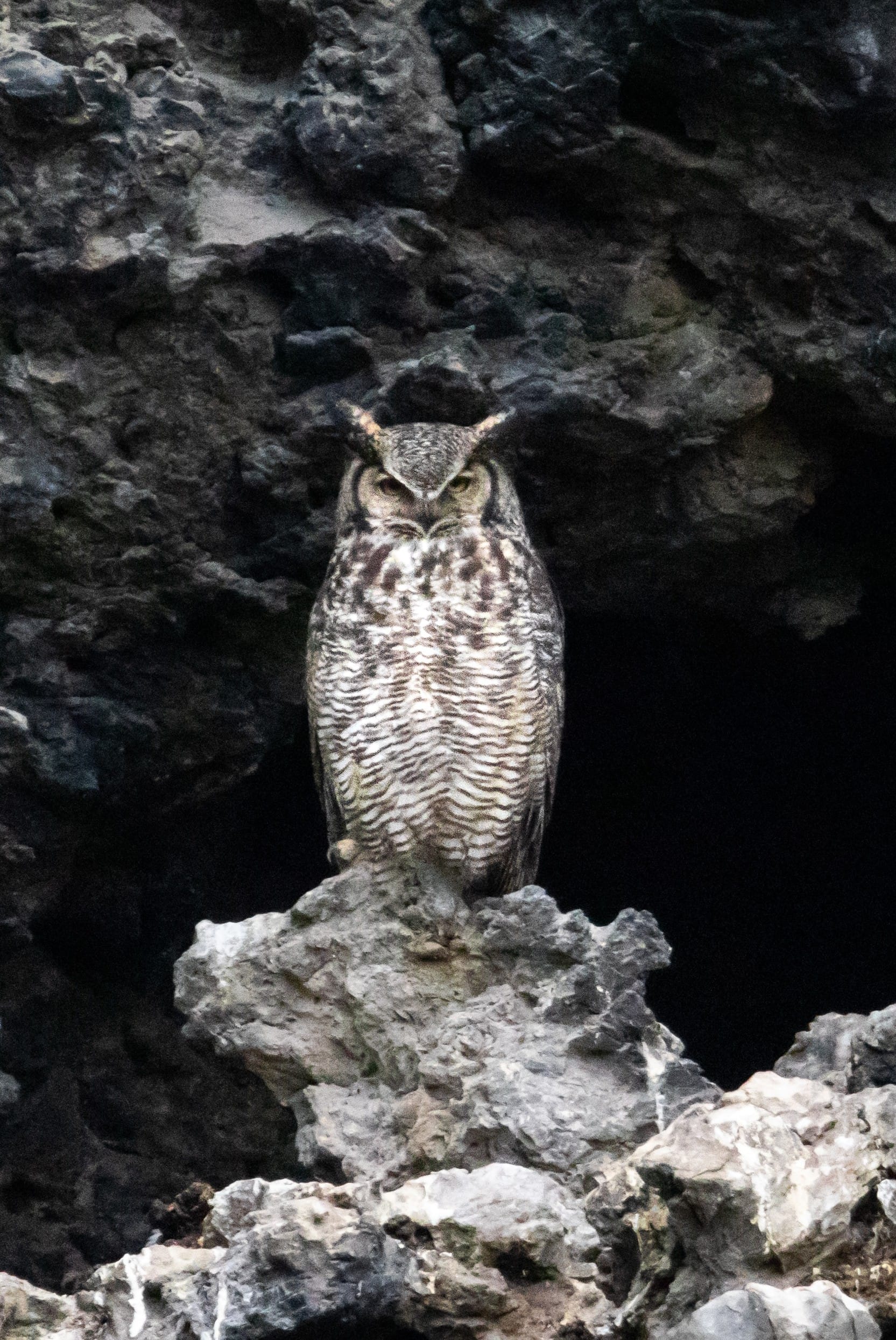
You'll mostly hear great horned owls after dark, and unlike a lot of desert sounds, hearing one doesn't mean you're going to see it. They're built for exactly that kind of quiet, unseen presence.
4. The Coyote
The coyote is the obvious inclusion here, and it earns the spot honestly.
A single coyote can produce an impressive range of sounds, including howls, yips, barks, whines, and yelps. Often stringing several together in the same sequence. Communication is the main driver behind it all: coyotes use these vocalizations to locate each other, defend territory, and stay connected with other members of their social group.
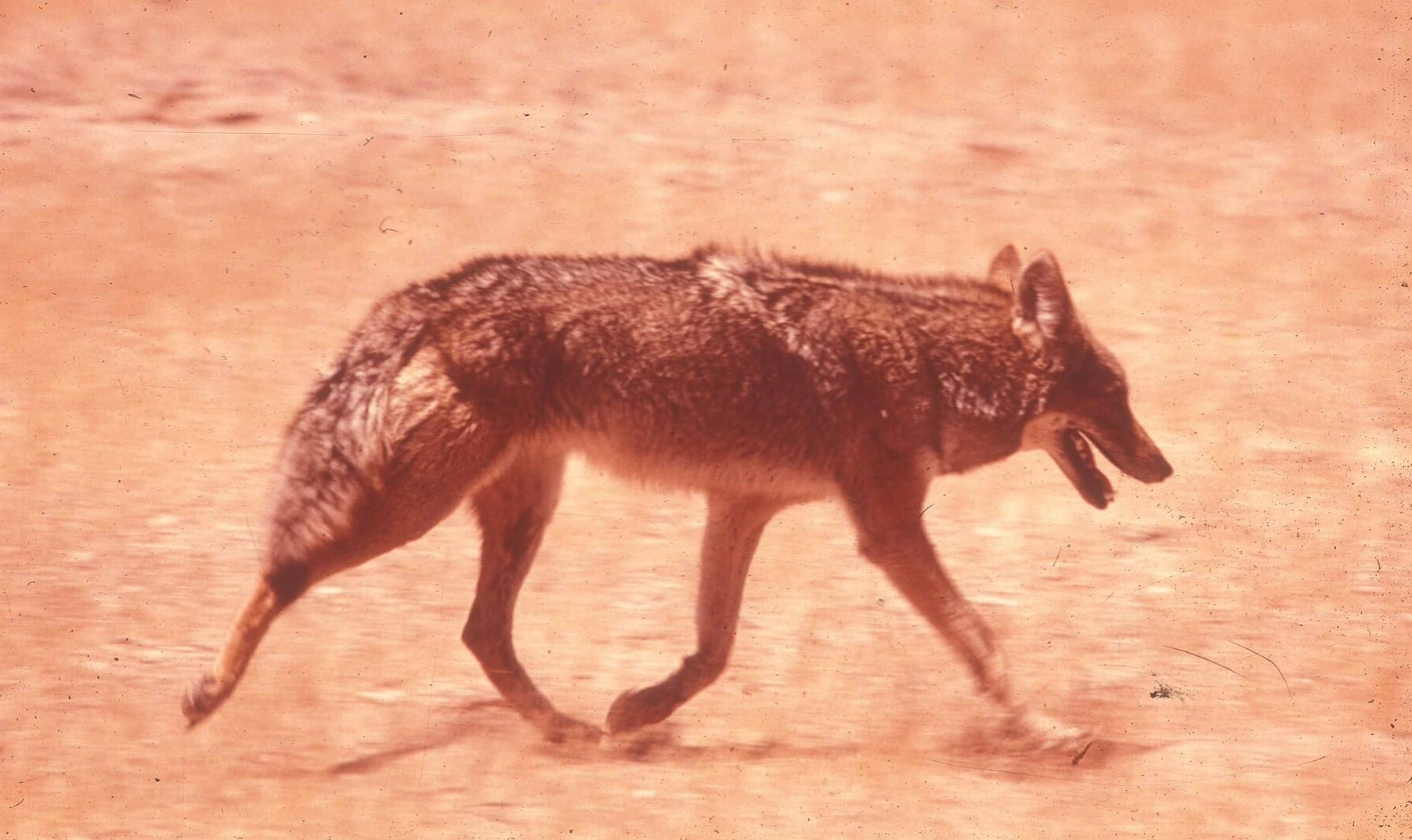
Here's the part that trips people up. The classic image of an entire pack howling together can be seriously misleading, since a small handful of coyotes vocalizing together can sound like a much larger group than what's actually out there. A coyote's call doesn't really match the stereotypical Hollywood wolf howl. It's closer to a string of yips and high-pitched calls that can sound almost eerie when it's drifting across the desert at night.
5. The Sonoran Desert Toad
This is where the list gets genuinely weird, because a toad has no business being this loud in a place this dry.
The Sonoran Desert toad is one of Arizona's largest native toads. Its call is surprisingly deep and strange, a low-pitched, almost metallic sound produced during breeding season. It's not the kind of noise most people associate with a desert landscape, which is exactly what makes it worth including.
The trick to how it survives here at all comes down to seasonal water. Summer monsoon storms create temporary pools and waterways across the desert, and those short-lived puddles become breeding grounds practically overnight. A wash that was bone-dry a few days earlier can suddenly turn into a noisy amphibian party, one that vanishes again almost as fast as it appeared.
6. The Gilded Flicker
This one brings an entirely different kind of desert noise to the list, because it's not a call at all.
Gilded flickers are woodpeckers, and while they do make plenty of vocalizations, the drumming is the genuinely interesting sound. Rather than calling out, they rapidly hammer their bills against resonant surfaces, which can include trees, dead branches, and occasionally structures around human development.
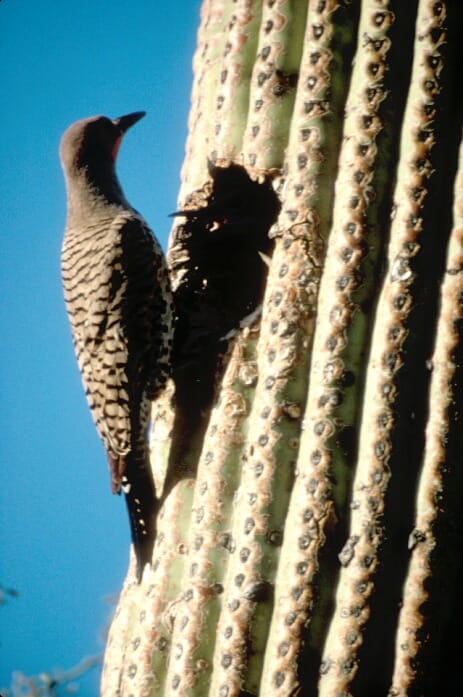
The bird is essentially turning whatever it's hammering into an amplifier. Find the right resonant surface, and a fairly small bird becomes an extremely noticeable source of noise, echoing well beyond where you'd expect a woodpecker-sized animal to reach.
The Desert Has Its Own Soundtrack
Morning belongs to the birds. Midday gets taken over by cicadas and other insects, buzzing at full volume in the heat. As evening arrives, bird calls start fading out while amphibians and mammals become more noticeable. By full night, coyotes, owls, and frogs have taken over as some of the desert's most recognizable voices.
It's less a single soundtrack than a rotating cast, handing the desert off from one set of performers to the next as the light changes.
How to Hear Arizona's Loudest Animals
You don't need to head deep into the wilderness to hear most of this. You just need to be in the right kind of place at the right time.
Desert washes are particularly productive, since the combination of water and vegetation draws in a wide range of animals. Riparian areas work for the same reason. Saguaro forests are excellent for both birds and insects, and desert preserves give you a better shot at hearing animals without competing against traffic noise. After a summer monsoon storm is one of the single best windows for amphibian activity, when temporary pools briefly bring the desert's frogs and toads out in force. Just sit quietly for a while and let the desert come to you. It usually doesn't take long.
How to Tell What You're Hearing
If you want a quick field guide for sorting out the noise, here's a simple way to think about it.
High-pitched buzzing during the hottest part of the day is almost certainly cicadas. Deep, repeated hoots after dark mean there's an owl somewhere nearby, though good luck spotting it. Howling, yipping, and barking drifting in from somewhere in the distance is coyotes, and probably fewer of them than it sounds like. A bizarre, deep, almost metallic sound coming from a temporary pool after a monsoon storm is very likely a Sonoran Desert toad. Rapid tapping coming from a tree is a woodpecker, most likely a gilded flicker putting some unlucky branch to work as an amplifier.
Subscribe to Roam Arizona
Sign up to get new Arizona stories, hidden gems, and updates delivered to your inbox.
You’re officially on the trail.
Peek at your inbox (or the spam gulch) for your first map.