Exploring Some of Arizona’s Urban Legends by Region


Arizona’s vast, sun-bleached landscapes are more than just scenic backdrops; they are repositories for some of the most unsettling folklore in the American West. Every corner of the state holds a story that defies logical explanation. These aren't the polished ghost stories of Hollywood or the sanitized legends found in tourist brochures. These are narratives tied to the specific dirt, water, and isolation of the regions they haunt. Whether you are navigating the dense ponderosa forests of the Mogollon Rim or the lonely, lightless stretches of the open road, you will find urban legends that are as much a part of the landscape as the cacti and the canyons. If you are looking to explore the darker side of the Grand Canyon State, here are some of the creepiest urban legends in Arizona, organized by region.
Central Arizona: The Mogollon Mermaid

The Mogollon Rim is famous for its towering ponderosa pines and deep mountain lakes, but it is also home to an aquatic enigma that makes many think twice about a moonlight swim. Known as the Mogollon Mermaid, this cryptid is described as a classic but deadly siren. She appears as a beautiful woman from the waist up with long flowing hair and mesmerizing eyes, trailing a scaly serpentine tail beneath the surface. While the idea of a mermaid in the high desert sounds far-fetched, sightings in reservoirs like Black Canyon Lake and Woods Canyon Lake have persisted for decades.
One of the earliest recorded encounters dates back to 1950, when a group of Boy Scouts at Black Canyon Lake reported seeing a half-human creature with a long scaly tail lurking in the water. The danger of the mermaid lies in her hypnotic siren song, which is a haunting melody said to lure boaters and swimmers toward the deep and murky centers of the lakes. In 1969, a group on a pontoon boat nearly crashed into deadly rocks while entranced by a beautiful woman swimming nearby. More recently, in 2012, campers reported hearing eerie and intoxicating vocalizations echoing across the water at night. This melody was so powerful that witnesses have been found wandering chest-deep into the freezing water in a trance, only saved when the siren suddenly vanished into the depths.
Northern Arizona: The Skinwalker
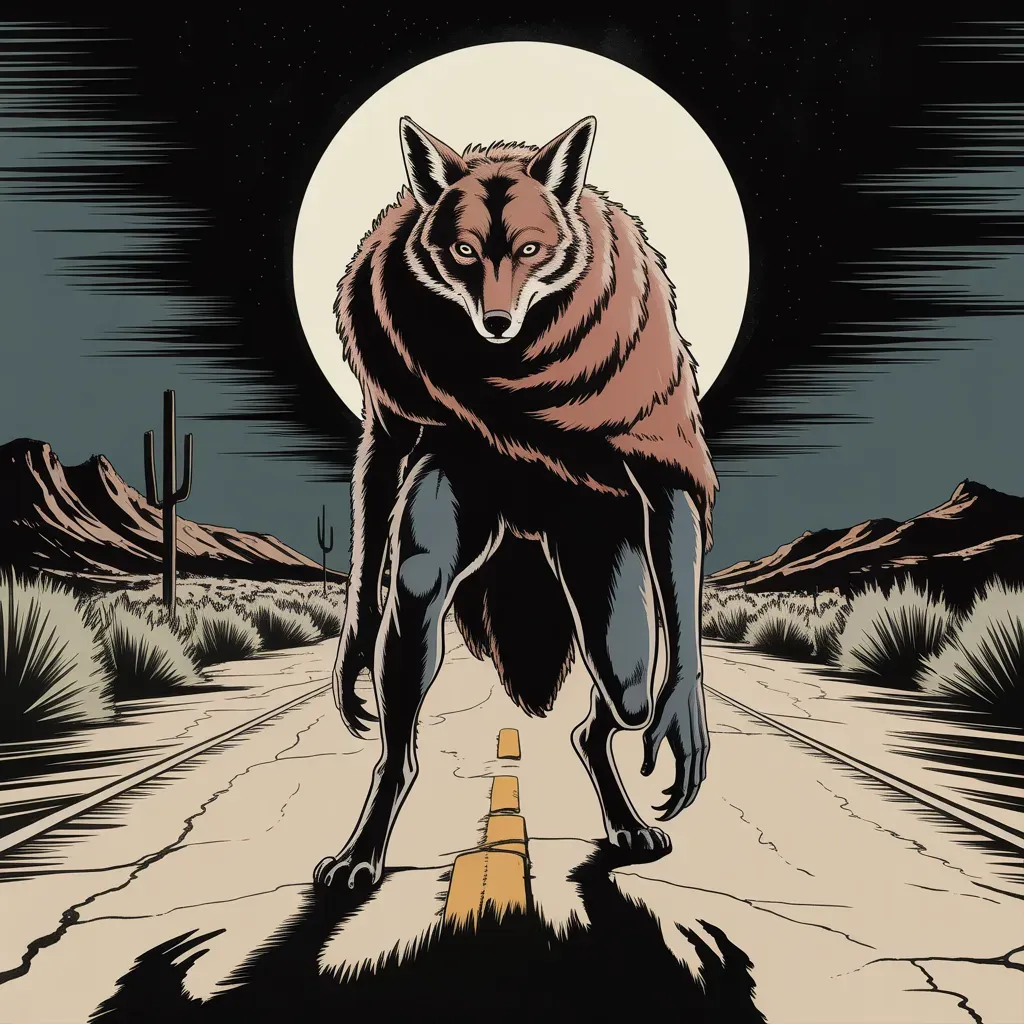
Northern Arizona is the domain of the Skinwalker. Rooted deeply in Navajo culture, it is not a simple monster but a malevolent practitioner of dark medicine who has attained the power to shapeshift into animals. These beings are most often reported as taking the form of wolves or coyotes, though they are frequently distinguished by their eyes, which remain disturbingly human even in animal form. The urban legend surrounding them serves as a strict social code for anyone traveling after the sun goes down.
Common accounts from travelers on lonely stretches of road describe creatures that run alongside vehicles at highway speeds in a manner that looks both animalistic and wrong. Locals warn that you must never whistle at night, never look a stray animal directly in the eyes, and never speak the name of the entity aloud, as these actions are believed to invite their attention. Many stories center on the eerie ability of the creature to mimic the voices of loved ones or the sounds of a crying infant to lure people out of their homes or vehicles into the darkness. If you are driving through the North and see a figure on the side of the road that doesn't look quite right, the local advice is simple: keep your windows up and do not stop until you reach a well-lit town.
Eastern Arizona: The Hounds of Hell
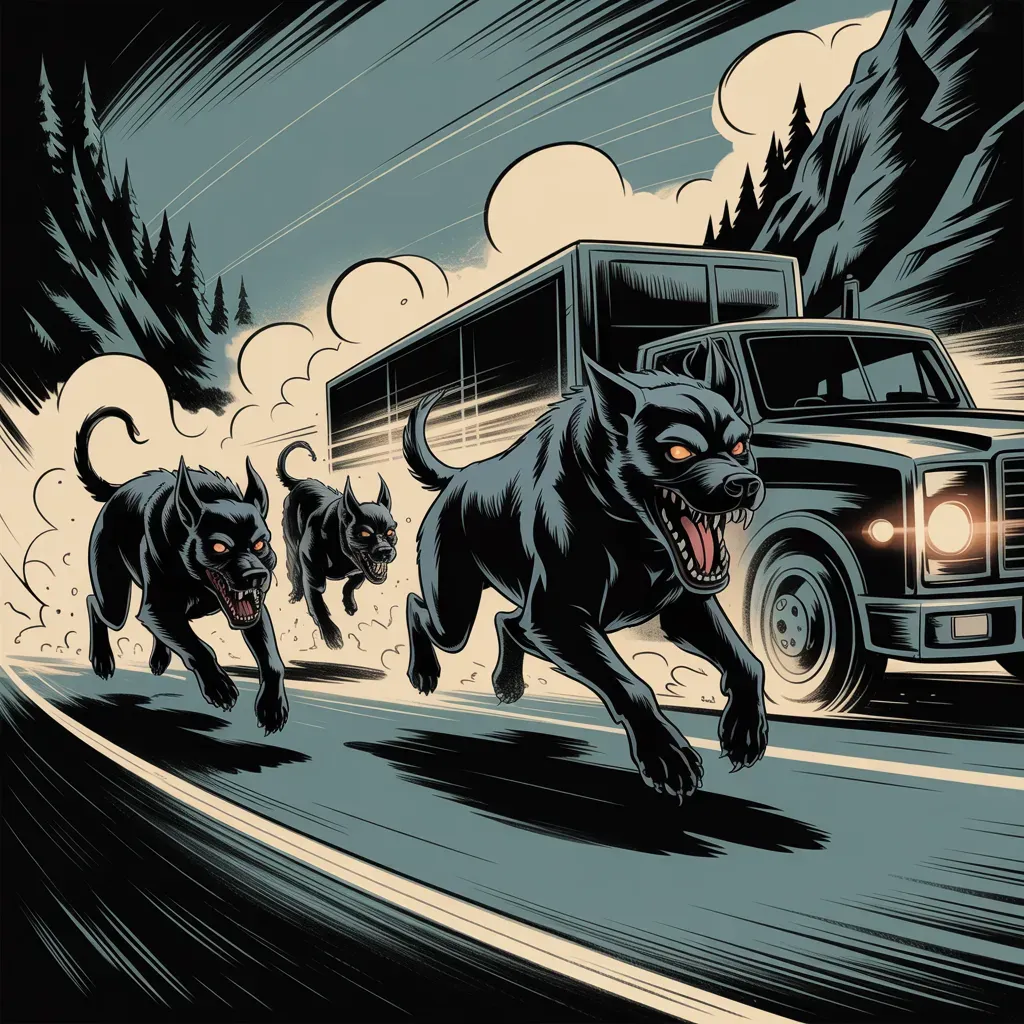
The Eastern region of Arizona is defined by the rugged terrain of the White Mountains and the infamous reputation of Highway 191. Long before it was renumbered, this winding mountain road was known as Highway 666, the Devil’s Highway. While the state eventually changed the name to discourage superstition, the rebranding did nothing to quiet the legends of the Hounds of Hell. These supernatural beasts are described as massive black dogs with glowing eyes that haunt the most isolated stretches of the pavement. Unlike normal wildlife, these creatures are said to appear out of nowhere and pursue travelers with terrifying speed and aggression.
Drivers passing through Greenlee and Apache counties frequently report these demonic canines pacing their vehicles even when traveling at speeds of sixty miles per hour. According to the urban legend, the hounds are not just spectral sightings but physical threats capable of shredding tires with their teeth or leaping at open windows to attack those inside. The sheer isolation and the sharp, dangerous curves of the road only add to the dread of an encounter. Many locals and truck drivers still refuse to travel this specific corridor after sunset, believing that the road remains a cursed path where the hounds act as guardians of a dark and ancient territory.
Southern Arizona: La Llorona
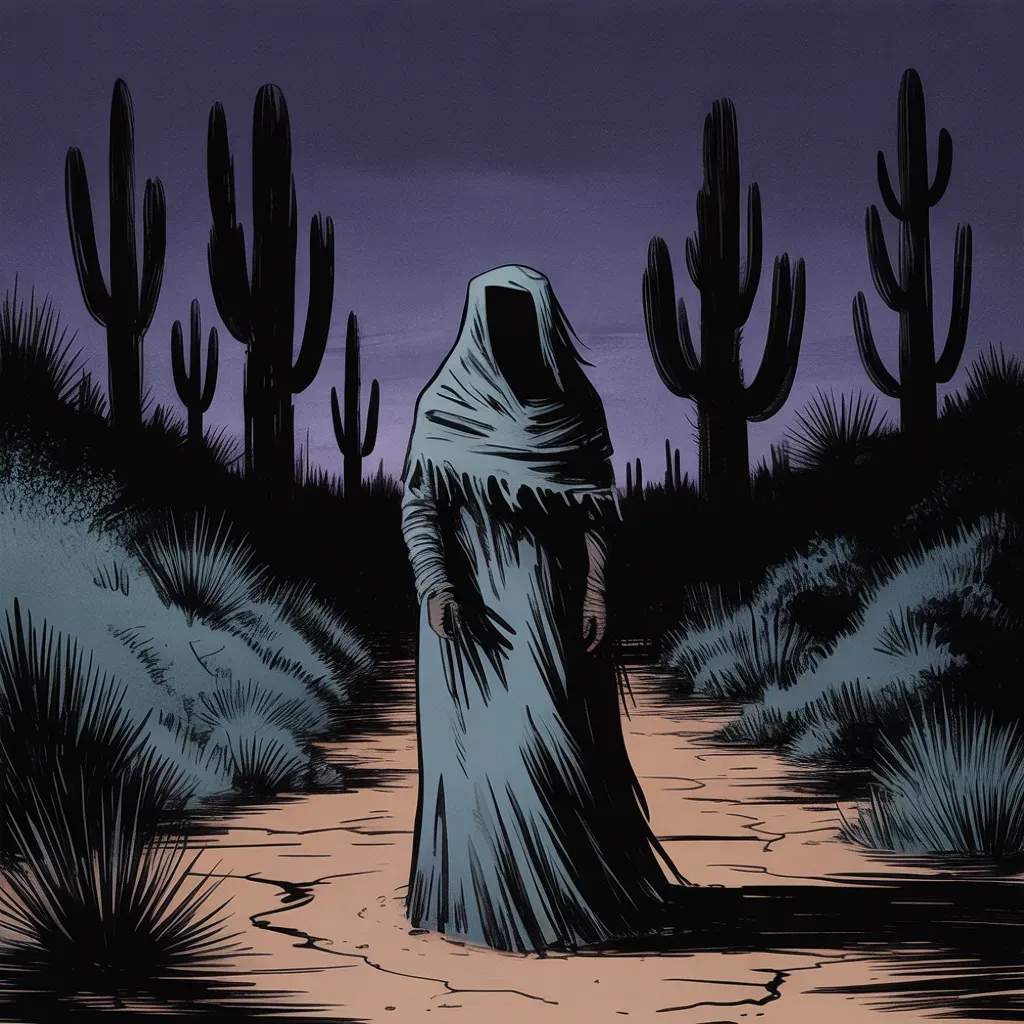
The legend of La Llorona is a constant presence along the banks of the Santa Cruz and Gila Rivers. Known as the Weeping Woman, she is the spectral remains of a mother who drowned her children in a fit of despair and was subsequently cursed to wander the earth for eternity. In the Tucson area, her story has evolved into a persistent urban legend that is tied to the city’s complex network of irrigation ditches and dry arroyos. Residents often report seeing a tall and slender figure in a tattered white gown gliding through the darkness of these washes, accompanied by a high-pitched wail that can be heard over the sound of the wind.
Her presence is considered a dark omen, and her cry is said to bring misfortune or even death to those who hear it clearly. Unlike many other ghost stories, the legend of La Llorona carries a visceral physical threat, as she is believed to mistake living children for her own and pull them into the shadows of the water or the mud of the riverbeds. This has made her a perennial warning used by parents to keep their children away from dangerous washes during the monsoon season or after the sun goes down. Whether she is viewed as a cautionary tale or a legitimate supernatural threat, her name remains a staple of the cultural fabric of the borderlands, serving as a reminder that some grief is too heavy for the grave to hold.
Western Arizona: Slaughterhouse Canyon Mother

Near the city of Kingman lies a jagged and narrow gorge known as Slaughterhouse Canyon, which serves as the setting for a pioneer era legend in Western Arizona. During the late 1800s, a family lived in a small cabin deep within the canyon, relying on the father to travel long distances for food and supplies. According to the legend, a brutal winter storm trapped the family while the father was away, leaving the mother and her children to face starvation. As the weeks passed and her sanity began to fray, the mother was driven to a state of complete delirium by the sounds of her starving children. In a final act of madness, she donned her wedding dress and murdered her family to end their suffering.
The legend states that she then wandered down to the canyon stream and continued to scream into the darkness until she eventually succumbed to the elements herself. Today, visitors and hikers claim that the canyon has retained a heavy and oppressive energy. On quiet nights, it is said that the agonizing and high pitched screams of the mother still echo off the sheer rock walls, sounding almost like the wind but carrying a distinctly human tone of despair. Local urban legend suggests that if you venture deep enough into the canyon after midnight, you might see a flash of a tattered white dress among the shadows or hear the frantic splashing of feet in the creek. It remains a grim destination for those looking to experience the darker side of Arizona's frontier history.
These legends show that Arizona is defined as much by its shadows as its sunlight. From the high country forests to the southern riverbeds, the landscape is home to persistent regional hauntings. These stories survive because they are anchored to the isolation of the desert, where the silence is rarely empty. Whether you are on a lonely highway or a dark trail, the land is always ready to tell its darkest stories to anyone who knows where to look.
Subscribe to Roam Arizona
Sign up to get new Arizona stories, hidden gems, and updates delivered to your inbox.
You’re officially on the trail.
Peek at your inbox (or the spam gulch) for your first map.