5 Pieces of Tucson Architecture That Belong in a Sci-Fi Movie

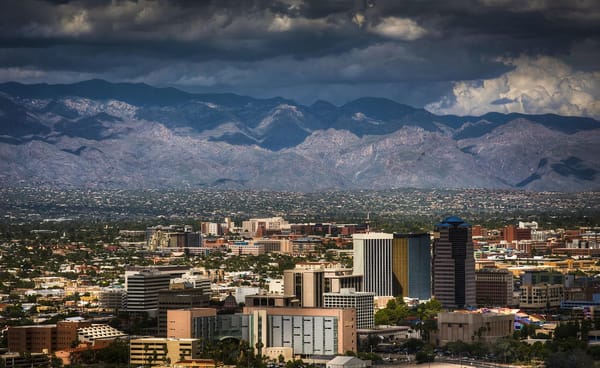
Tucson is famous for its Spanish missions, desert sunsets, and rugged mountain backdrops, but if you look past the adobe, the city is full of architectural glitches and Space Age experiments. Scattered among the adobe walls and historic storefronts are buildings that feel like they were pulled straight from a Hollywood soundstage.
You don’t need a time machine or a warp drive to find them, either. You just need to know where to look in the Old Pueblo.
From Cold War–era optimism to strange geometric designs that feel almost alien, Tucson has more than a few places that could pass for film sets in a science fiction movie. Here are five pieces of architecture around town that feel like they belong in another world.
1. The Upside-Down Pyramid (The Dystopian Headquarters)
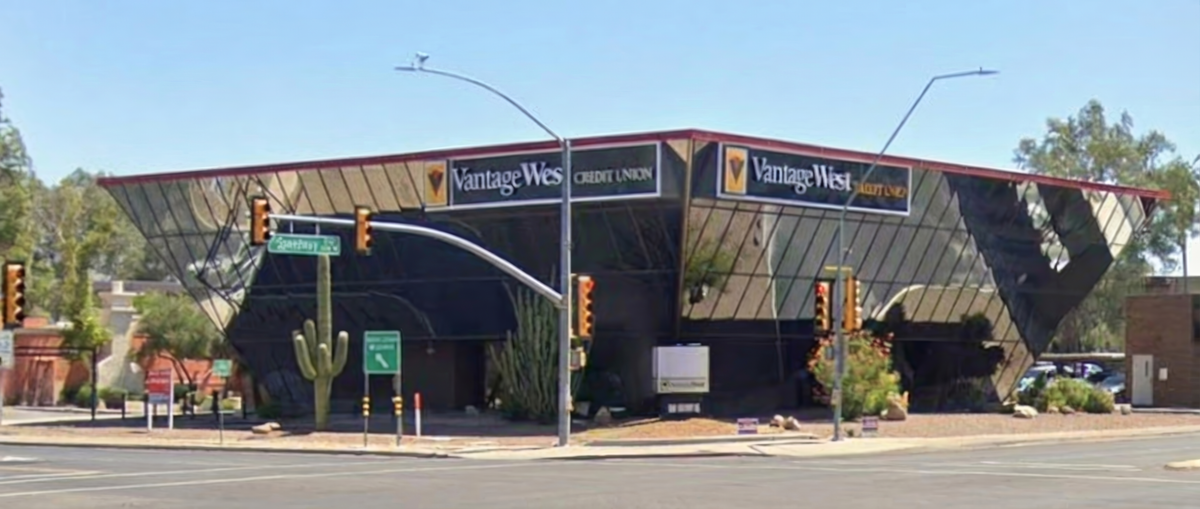
If a science fiction movie needed a headquarters for a mysterious corporation pulling strings behind the scenes, Tucson already has the perfect building.
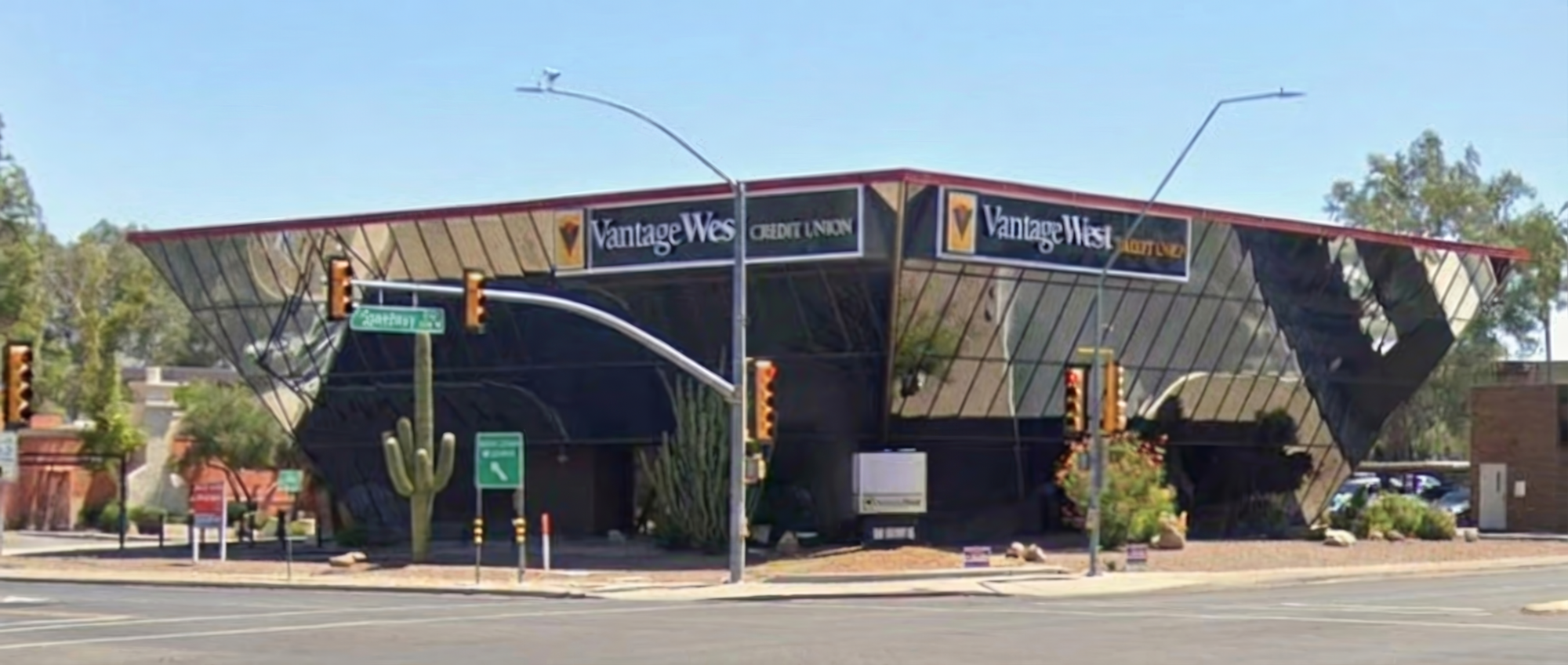
Many just call it the Upside-Down Pyramid, and the nickname explains itself the moment you see it. The office building sits along Speedway & Wilmot, and its structure widens as it rises, creating the unmistakable shape of an inverted pyramid hovering above the ground.
It’s an unusual design choice anywhere, but especially in a city better known for adobe walls and low desert architecture. The result is one of the strangest silhouettes in the city.
The top-heavy geometry gives it a cinematic quality. The kind of structure you’d expect to see in a sci-fi film where powerful executives meet in a glass-walled boardroom while the rest of the world carries on outside. It looks like the kind of place where high-stakes "cyber-noir" deals go down.
2. Hirsh’s Shoes (The 1950s Space Colony)
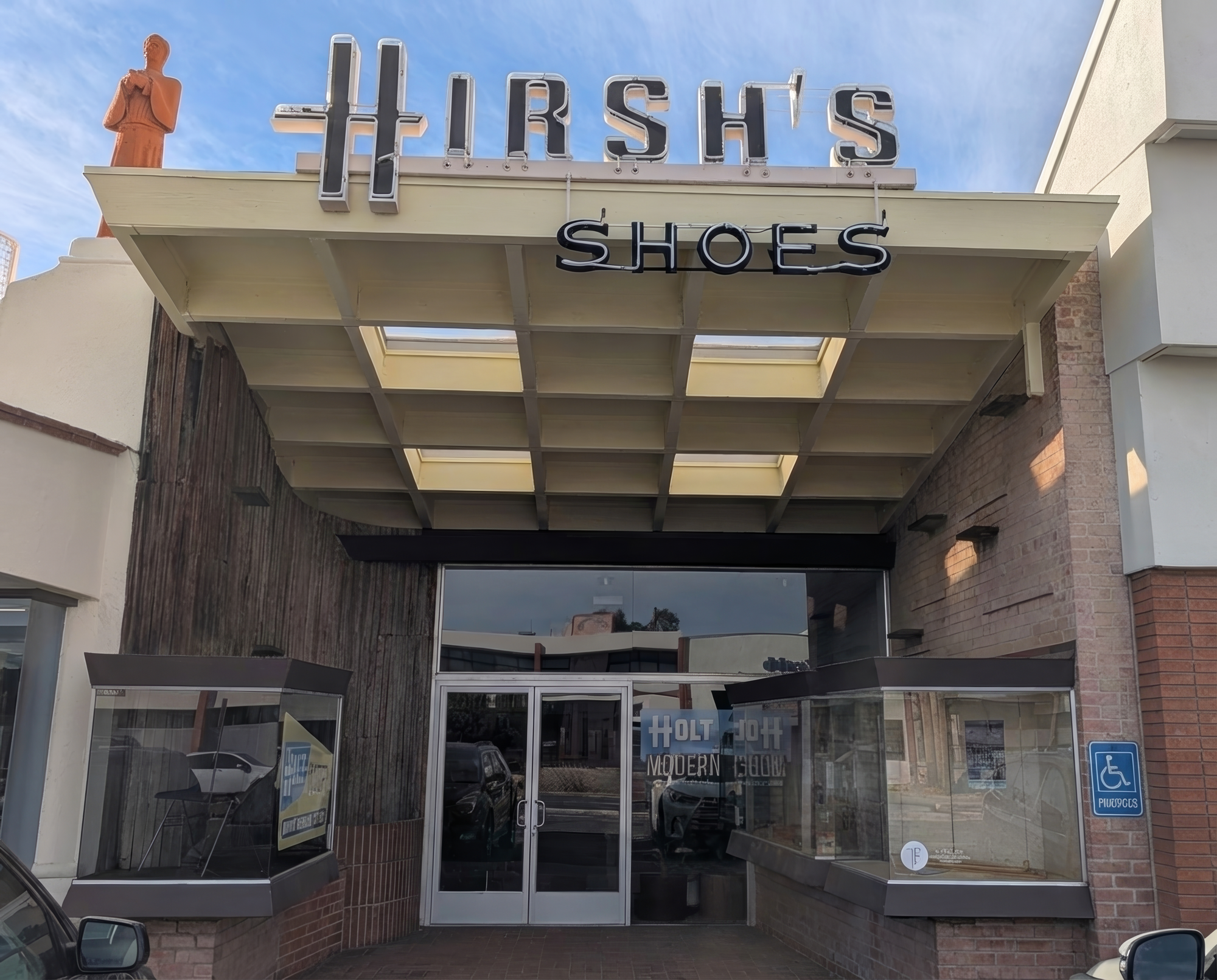
Drive down Speedway Boulevard and you’ll find one of Tucson’s "Raygun Gothic" mid-century buildings. Walking up to Hirsh’s Shoes feels like entering a 1950s comic book vision of a colony on Mars.
The building was designed in 1954 by Tucson architect Bernard Friedman, and it perfectly captures the era’s fascination with the future. The accordion-style roofline and open-air lobby invites were Tucson’s answer to the booming car culture of the 1950s. Businesses competed to stand out with bold designs that would grab the attention of drivers passing by. Hirsh’s did exactly that.
Today the building still looks like it belongs in a retro comic book about a shopping center on a newly terraformed Mars. It is pure retro-futurism captured in concrete and glass.
3. Welcome Diner (The Galactic Waystation)
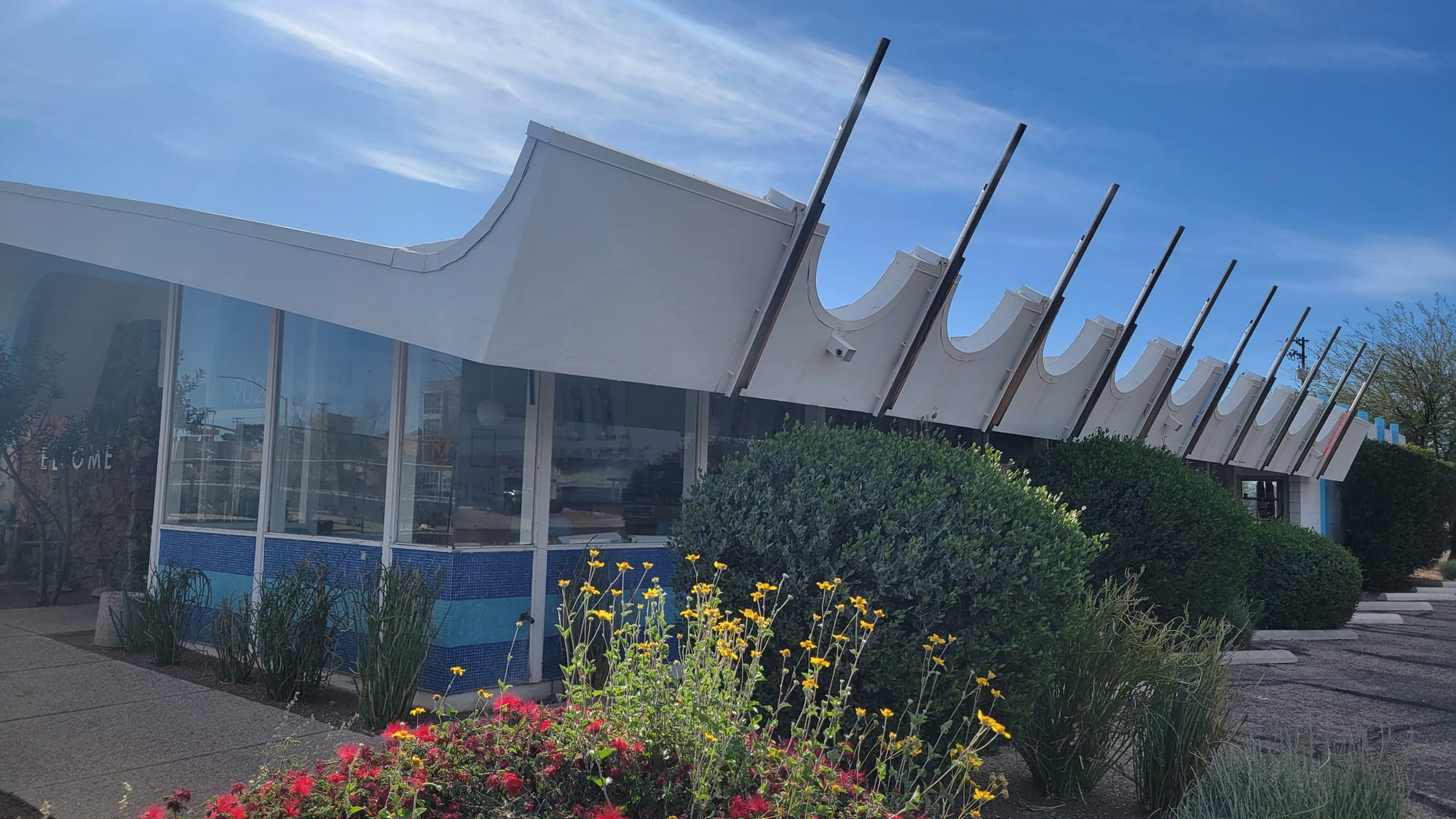
Every good sci-fi story needs a roadside stop where travelers gather before heading back into the unknown. Tucson’s version might just be Welcome Diner.
The diner is a perfect example of Googie architecture, the futuristic design style that exploded during the Space Race. Googie buildings were meant to evoke rockets, satellites, and the sleek optimism of the early space program.
You can see it everywhere in the structure’s design: the sharp angles, the dramatic roofline, and the glowing neon sign that lights up Broadway after dark. It’s easy to imagine a starship crew pulling in for one last meal before jumping back into hyperspace.
4. Fox Tucson Theatre (The Cyberpunk Opera House)
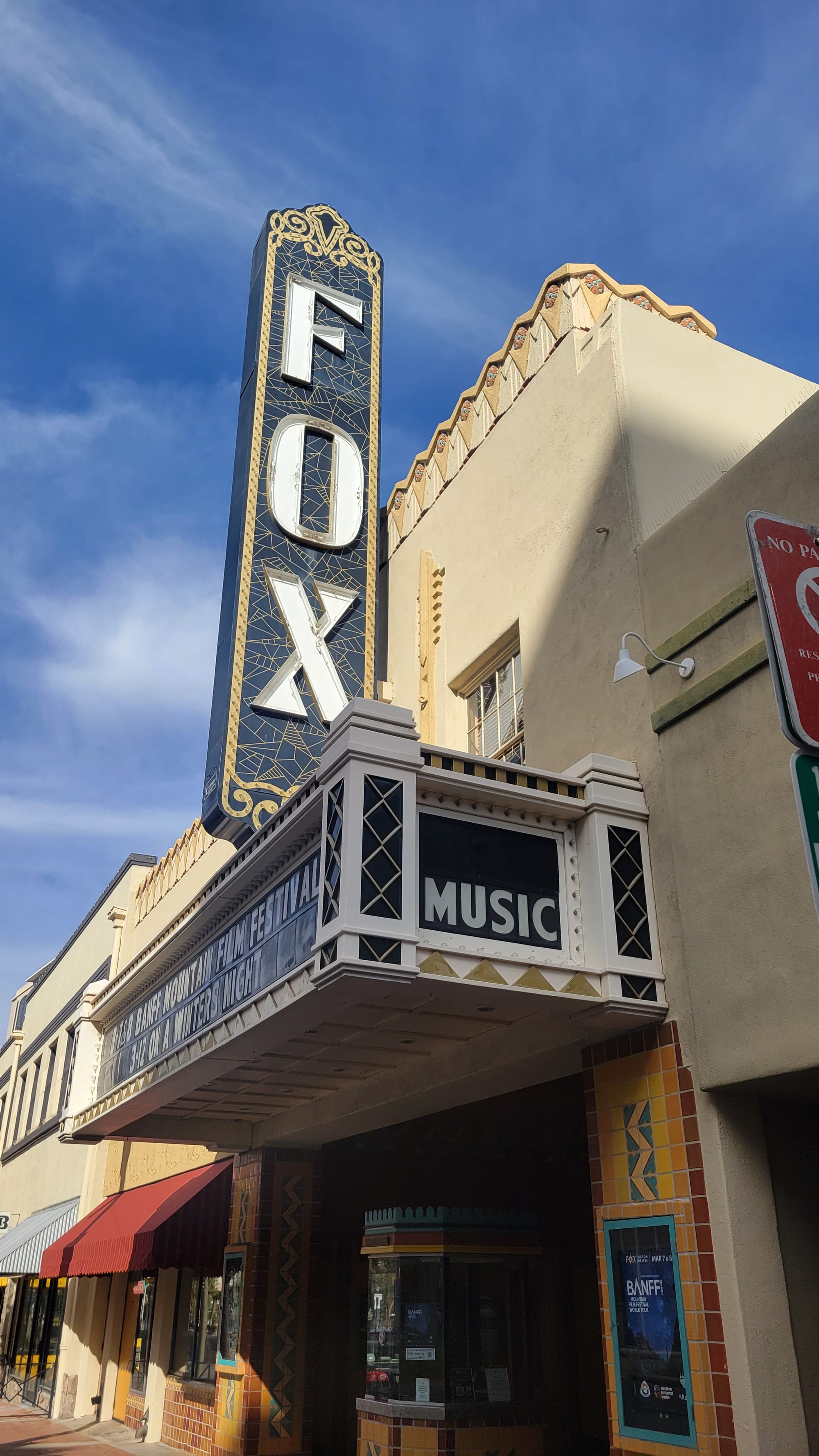
From the outside, the Fox Theatre looks like a glamorous relic from the golden age of cinema. Step inside, though, and it starts to feel strangely futuristic.
The Fox was designed in a style sometimes called Southwestern Art Deco. The theater blends desert motifs with the sleek geometric shapes that defined Art Deco design. The patterns create a strange “retro-future” atmosphere that wouldn’t feel out of place in a neon-lit sci-fi city.
The Fox is exactly where you’d film a high-stakes scene in a dark, tech-heavy future where the elite still cling to old-world glamour.
5. The MacArthur Building (The 2D Glitch)
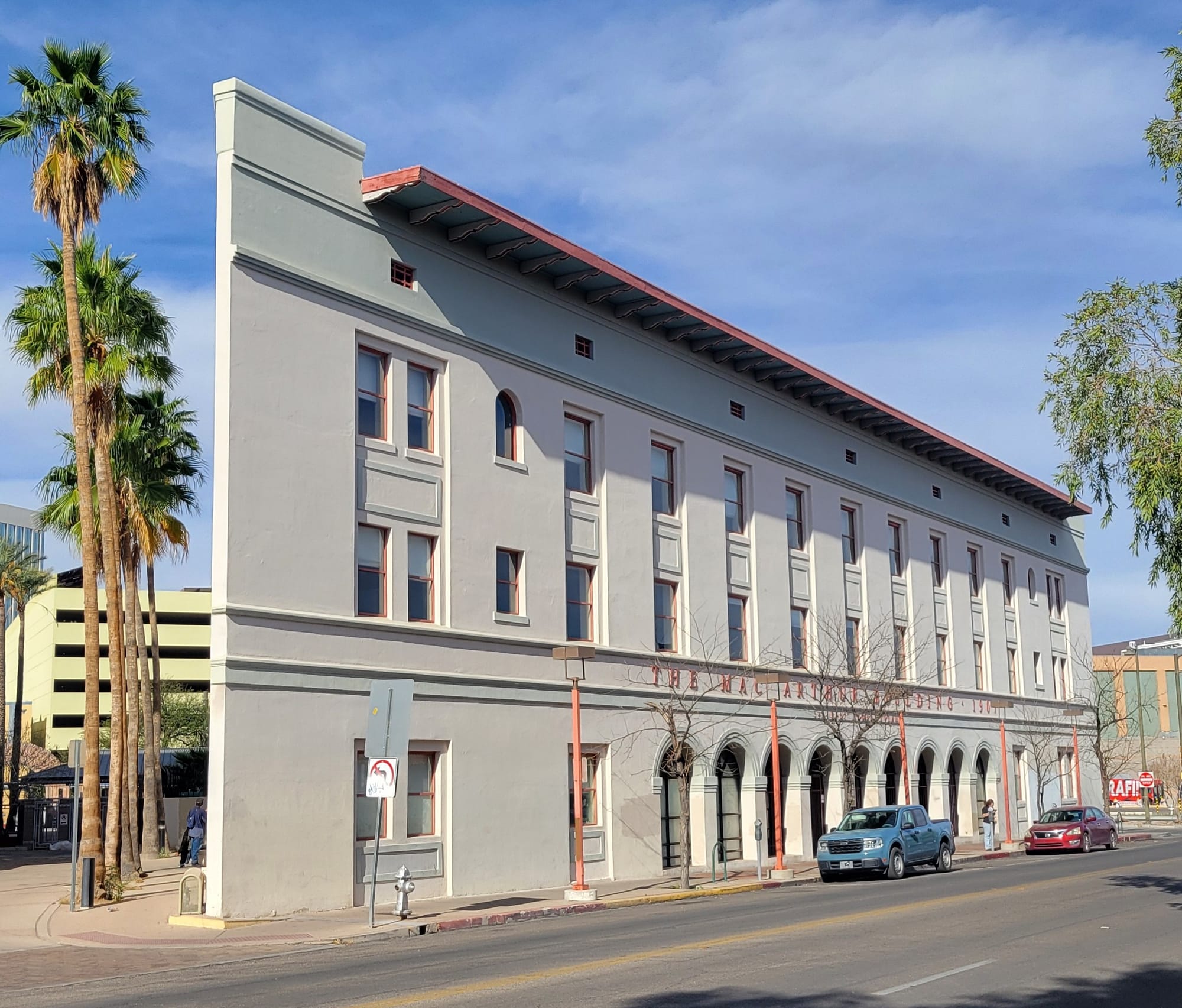
Some buildings feel futuristic because of their design. Others feel strange simply because of how they occupy space.
The MacArthur Building downtown has an extremely narrow triangular footprint that are similar to the famous Flatiron buildings found in other cities. Depending on the angle you approach it from, the structure can appear almost impossibly thin.
From the right viewpoint, the building looks like a two-dimensional prop rather than a real structure. It’s the kind of visual trick you might see in a science fiction movie to suggest something is slightly off about the world around you.
Turn the corner, and suddenly the “building” expands into something much larger than it first appeared.
It’s the architectural equivalent of a glitch in the simulation.
Tucson's Unexpected Sci-Fi Side
These buildings prove that Tucson’s architectural history isn’t just one note. The city may be best known for adobe walls and historic missions, but its streets also tell the story of wildly different eras colliding through Cold War optimism, mid-century futurism, and experimental urban design.
Sometimes those styles come together in ways that feel almost otherworldly.
Next time you’re driving through town, keep an eye out for them. The city might not be the first place you think of when it comes to science fiction settings, but a few corners look like they’re already halfway to the future.
Subscribe to Roam Arizona
Sign up to get new Arizona stories, hidden gems, and updates delivered to your inbox.
You’re officially on the trail.
Peek at your inbox (or the spam gulch) for your first map.