Biosphere 2: World’s Largest Earth Science Lab

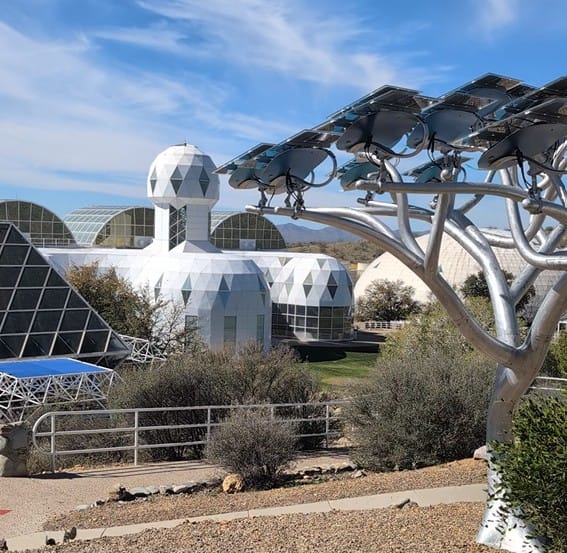
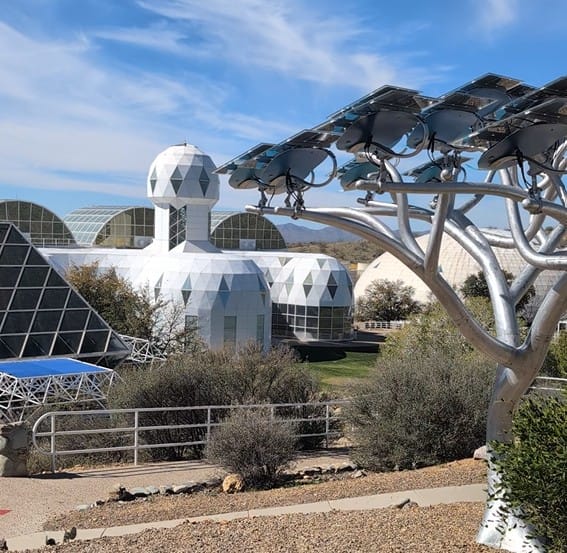
Biosphere 2 is a striking landmark in Southern Arizona, standing as a massive glass-and-steel monument to scientific ambition. Whether you are interested in the "biospherians" who lived inside in the 1990s or the cutting-edge climate research happening today, this guide covers everything you need to experience this engineering marvel.
A Space Colony in the Desert
Constructed between 1987 and 1991 in the foothills of the Santa Catalina Mountains, Biosphere 2 was originally designed as a prototype for future colonies in outer space. The project aimed to determine if a team could sustain life indefinitely within a sealed, self-regulating environment.
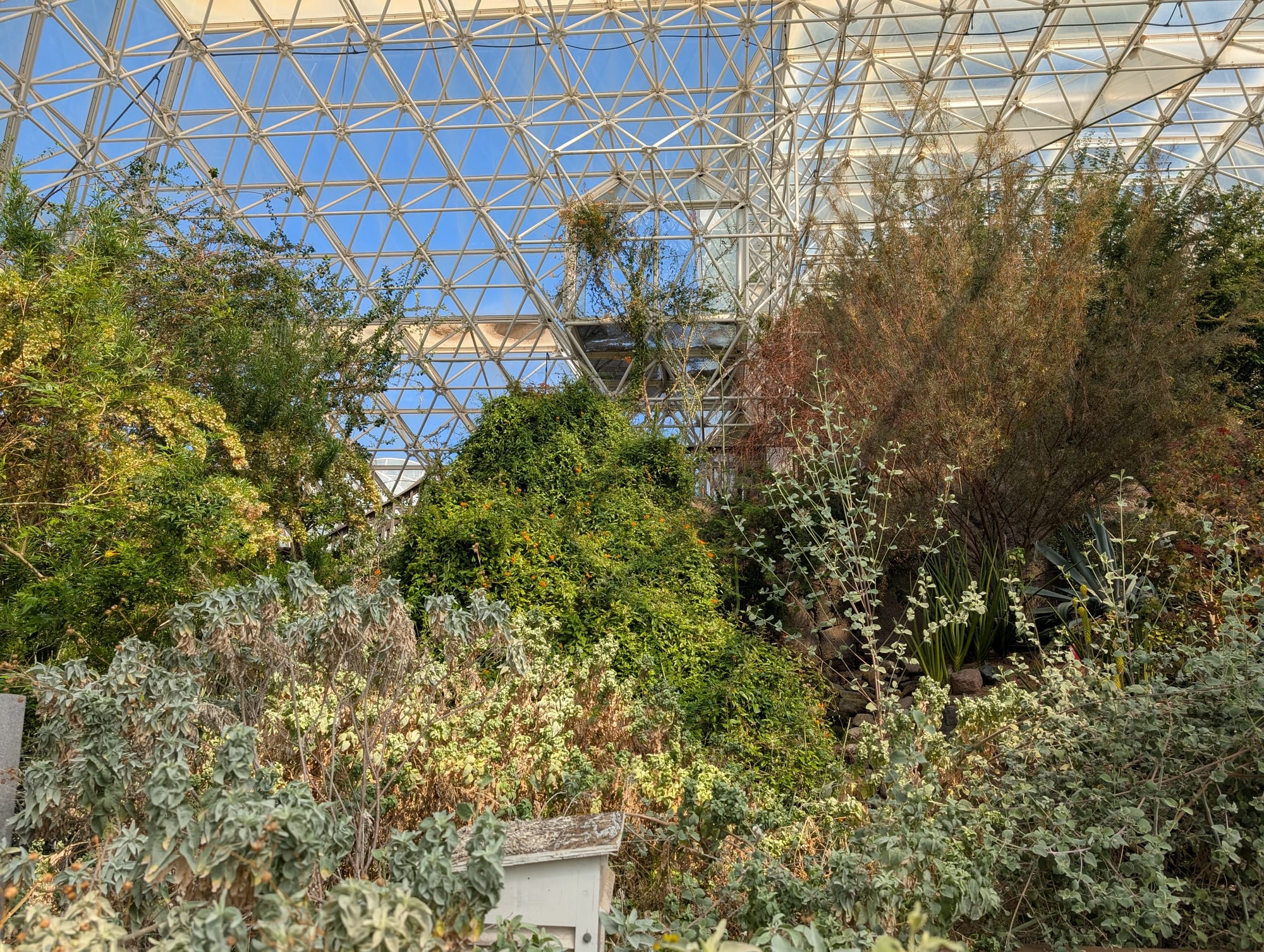
In 1991, eight researchers were sealed inside for a two-year mission. While they faced significant challenges, such as fluctuating oxygen levels and food shortages, the experiment provided invaluable data on closed-loop survival. Today, the University of Arizona operates the facility, shifting the focus from space colonization to understanding how our own planet reacts to climate change.
The Lungs
One of the most impressive features is not immediately visible. Since the glass structure is airtight, the air inside expands and contracts as the Arizona sun heats it. To prevent the glass from shattering under the pressure, engineers built two massive external domes known as "The Lungs." These use giant rubber diaphragms that rise and fall to regulate internal air pressure. As the air inside the main structure heats and expands, the diaphragm lowers. As it cools and contracts, it rises.
The system operates on physical pressure dynamics rather than complex computerized controls. It is a straightforward but highly effective engineering solution, and arguably one of the most fascinating components of the facility. The lungs are a masterpiece of 20th-century mechanical engineering.
The Wild Biomes
The 3.14-acre facility contains distinct environments, each mimicking a specific Earth ecosystem:
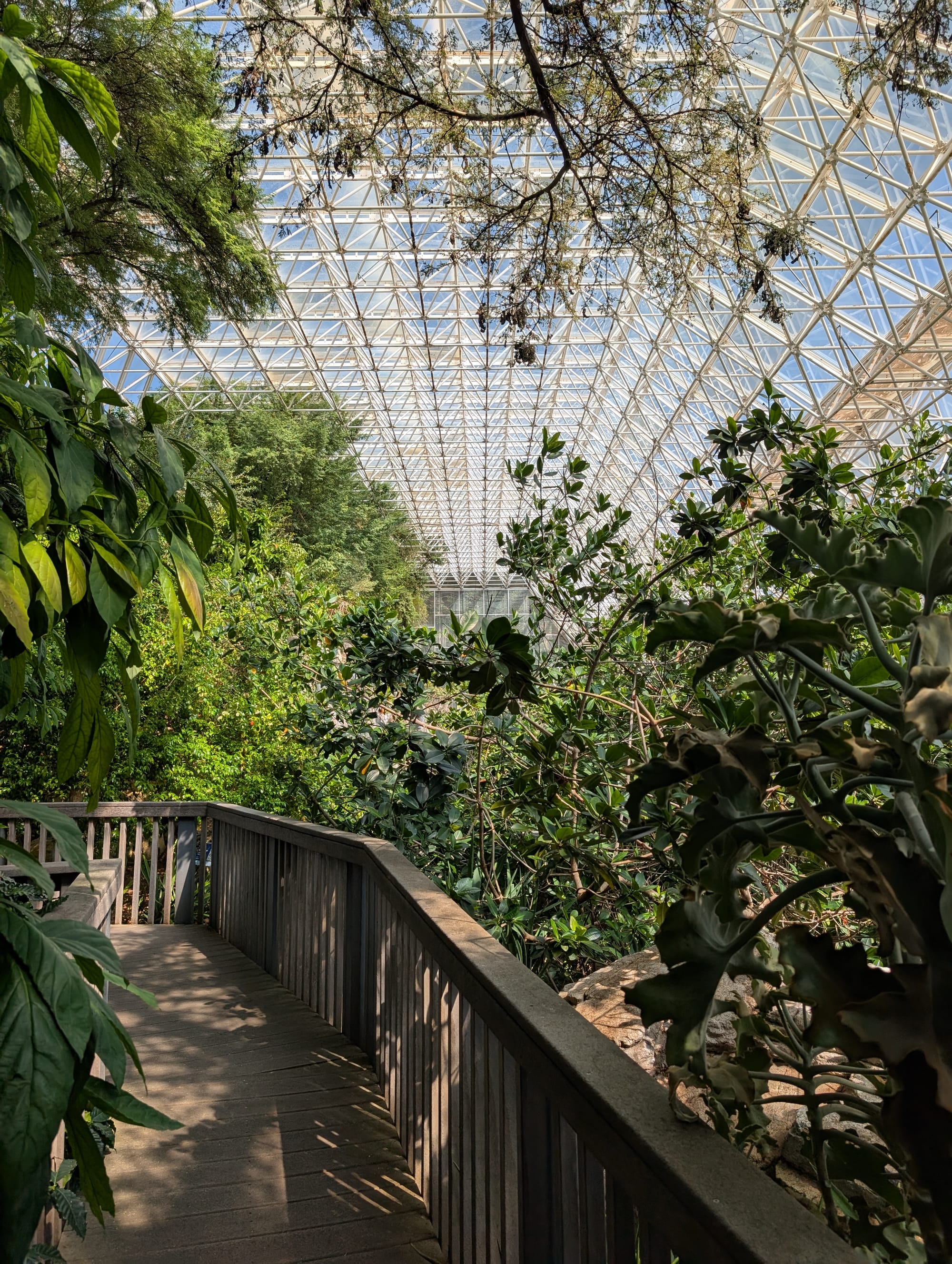
- The Rainforest: A dense jungle with many tropical tree species.
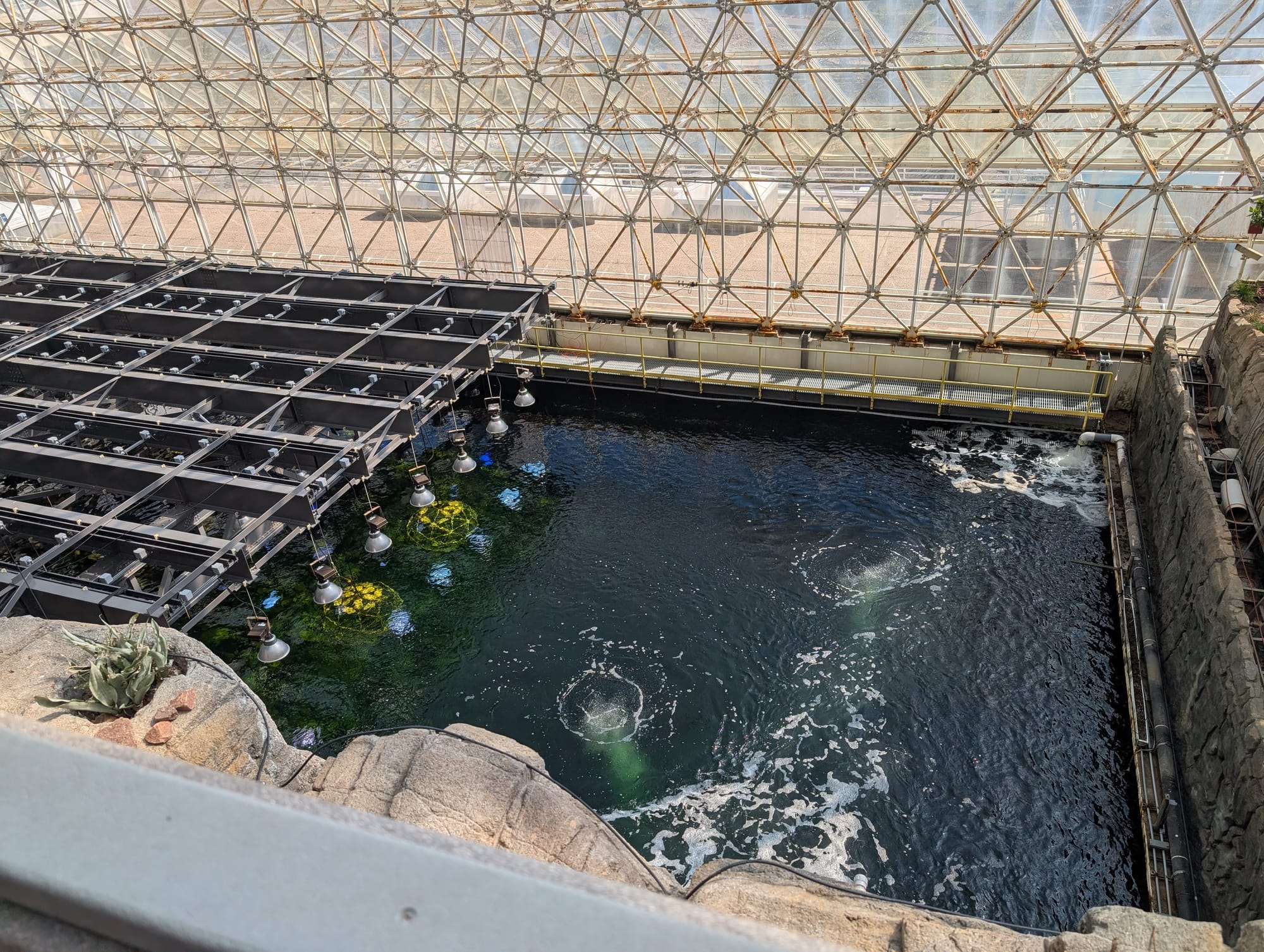
- The Ocean: A saltwater tank featuring a coral reef.
- The Mangroves: A replica of coastal wetlands used to study water filtration.
- The Savanna: A transition zone between the desert and the forest.
- The Fog Desert: An arid environment designed to mimic coastal deserts.
Biosphere 2 Today
Today, Biosphere 2 is owned and operated by the University of Arizona. Its focus has shifted from space colonization to Earth systems science.
Current research includes climate modeling, drought resilience, carbon cycle studies, and ecosystem responses to environmental stress. The facility now serves as a controlled environment laboratory for understanding how Earth’s systems react to change. The knowledge is directly applicable to current climate challenges.
Visiting Information
Biosphere 2 is open to the public year-round. Most visits are self-guided using a mobile app that walks guests through the biomes and the “technosphere,” which houses the mechanical infrastructure that supports the enclosed systems.
If available, the Guided Lung Tour is worth adding, as it provides access inside the pressure-regulation domes and offers a deeper understanding of the facility’s structural design.
Tips for Your Visit
To get the most out of your trip to the Oracle foothills, keep these logistics in mind:
- Download Before You Go: Cell service is notoriously spotty as you climb toward the facility. Download the Biosphere 2 Experience app and the offline tour content at home or in Tucson before you head out.
- Admission & Timing: Tickets are can be bought online beforehand or at the door. Aim to arrive at 9:00 AM to beat both the heat and the crowds. Plan to spend about 1.5 to 2 hours exploring the entire site.
- The Lighting Sweet Spot: For the best photos of the glass architecture, aim for mid-morning. In the early morning or late afternoon, the heavy steel framing casts long, harsh shadows across the biomes and your shots.
- The Humidity Factor: Even in the middle of an Arizona winter, the Rainforest biome is kept at high humidity. Dress in layers so you don't overheat while moving between the dry desert and tropical sections.
- Footwear Matters: You will be walking about a mile over a mix of concrete, gravel, and metal grates. Stick to sturdy walking shoes or boots; save the flip-flops for the drive home.
Subscribe to Roam Arizona
Sign up to get new Arizona stories, hidden gems, and updates delivered to your inbox.
You’re officially on the trail.
Peek at your inbox (or the spam gulch) for your first map.